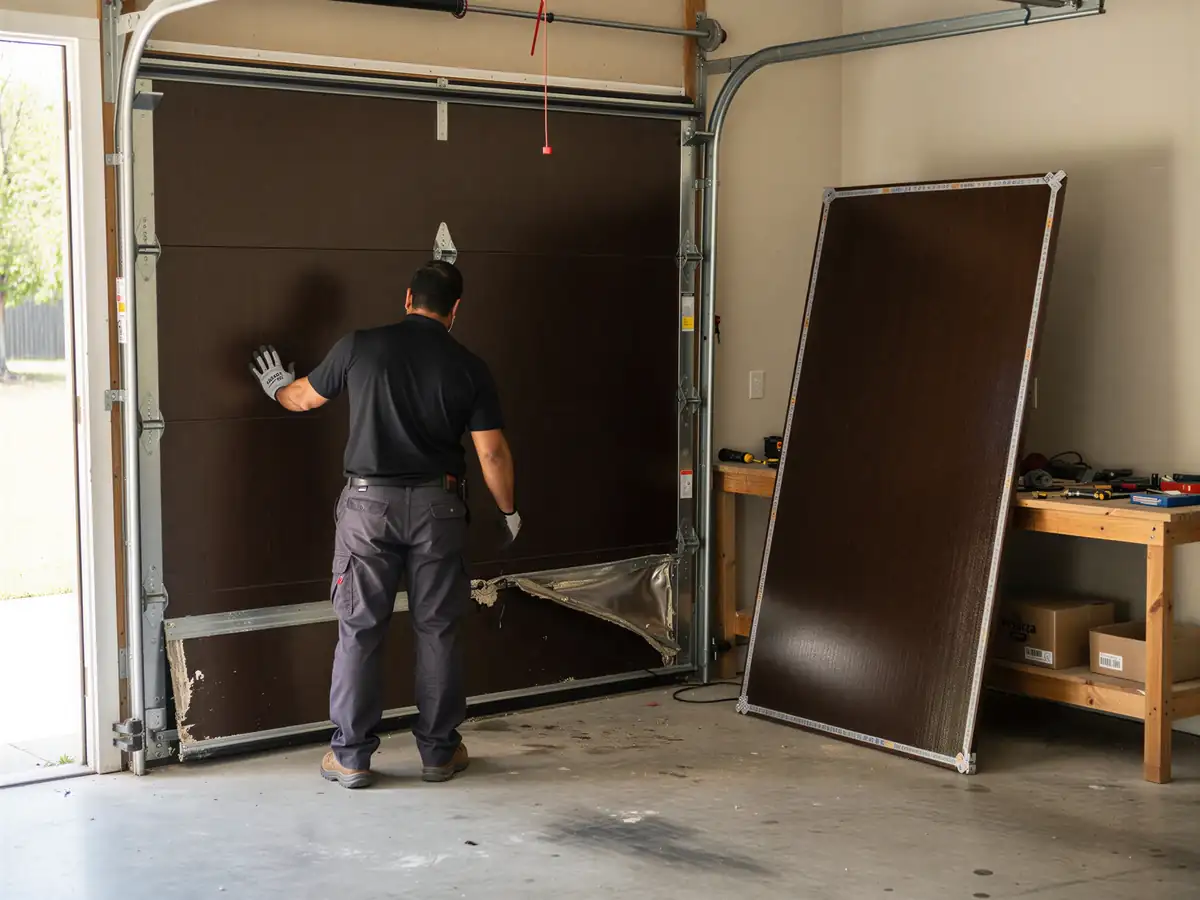
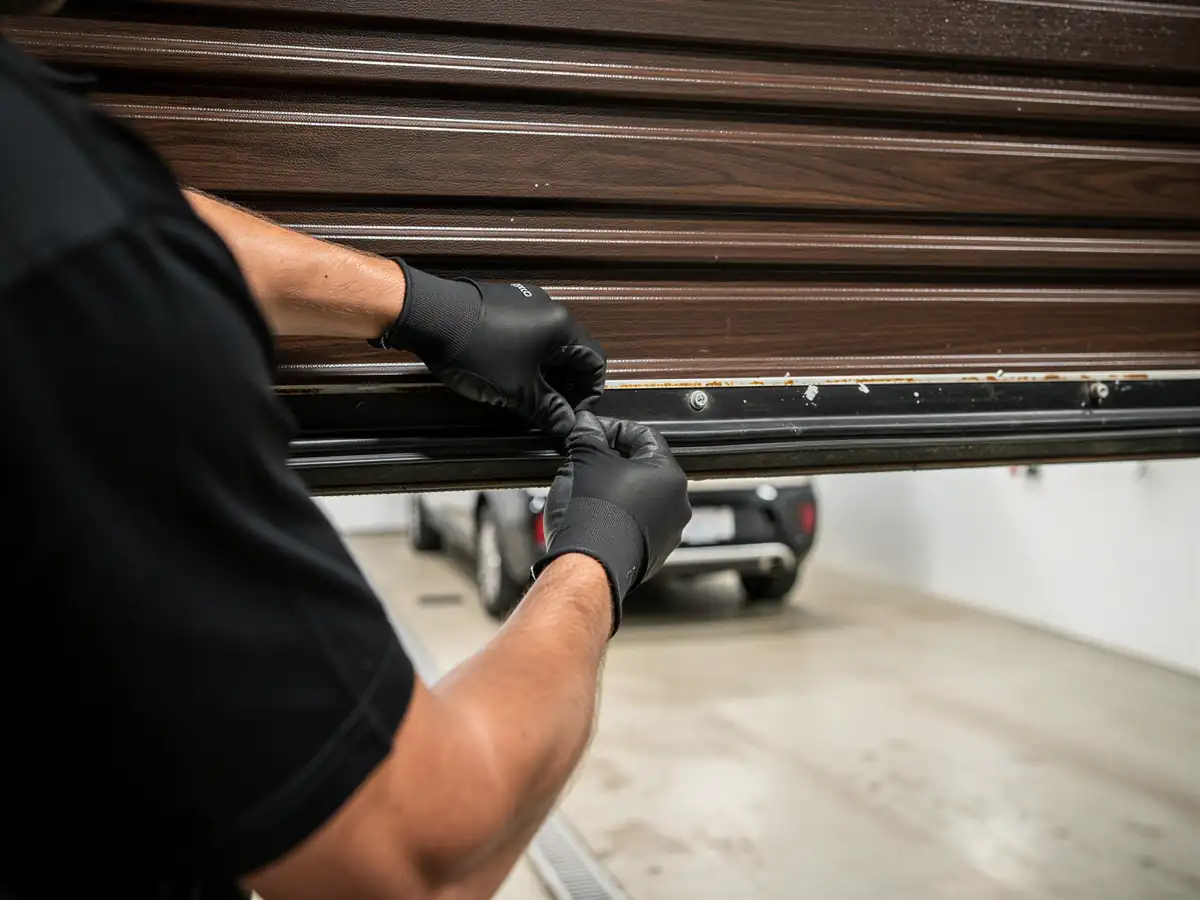
Opener Repair for Maitland Homes Built Around 1996
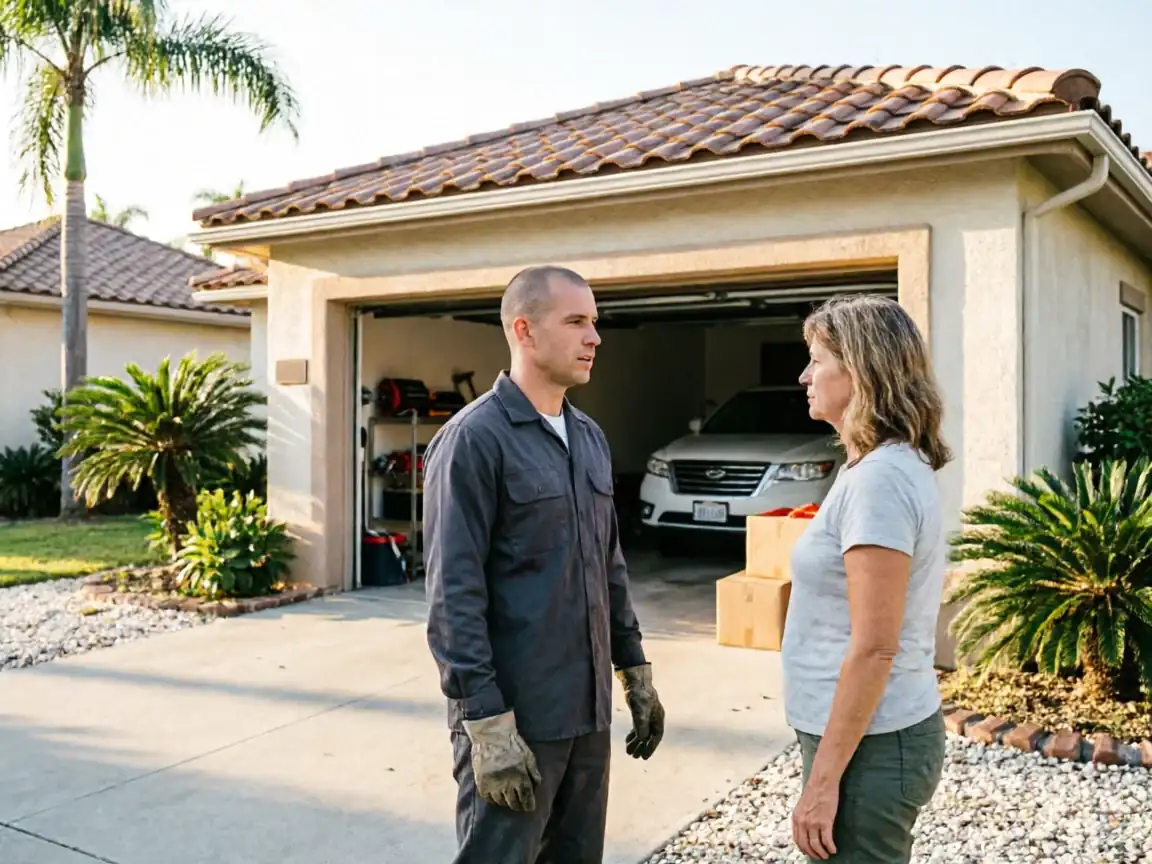
Maitland's median household income tops $93,000, and most openers here date to the 1996 building boom. We cover opener repair and replacement from Casselberry, 4 miles away.
Maitland sits in a part of our service area where the money changes the math. At a median household income of $93,318, the calculation most homeowners run isn't "can I afford the part" - it's "is it worth paying someone to fix a board that's going to need replacing again in three years." We see that call go toward full opener replacement more often here than in older, lower-income pockets of the territory, because the price gap between a $280 logic board swap and a new opener with a modern DC motor and battery backup is small relative to the house.
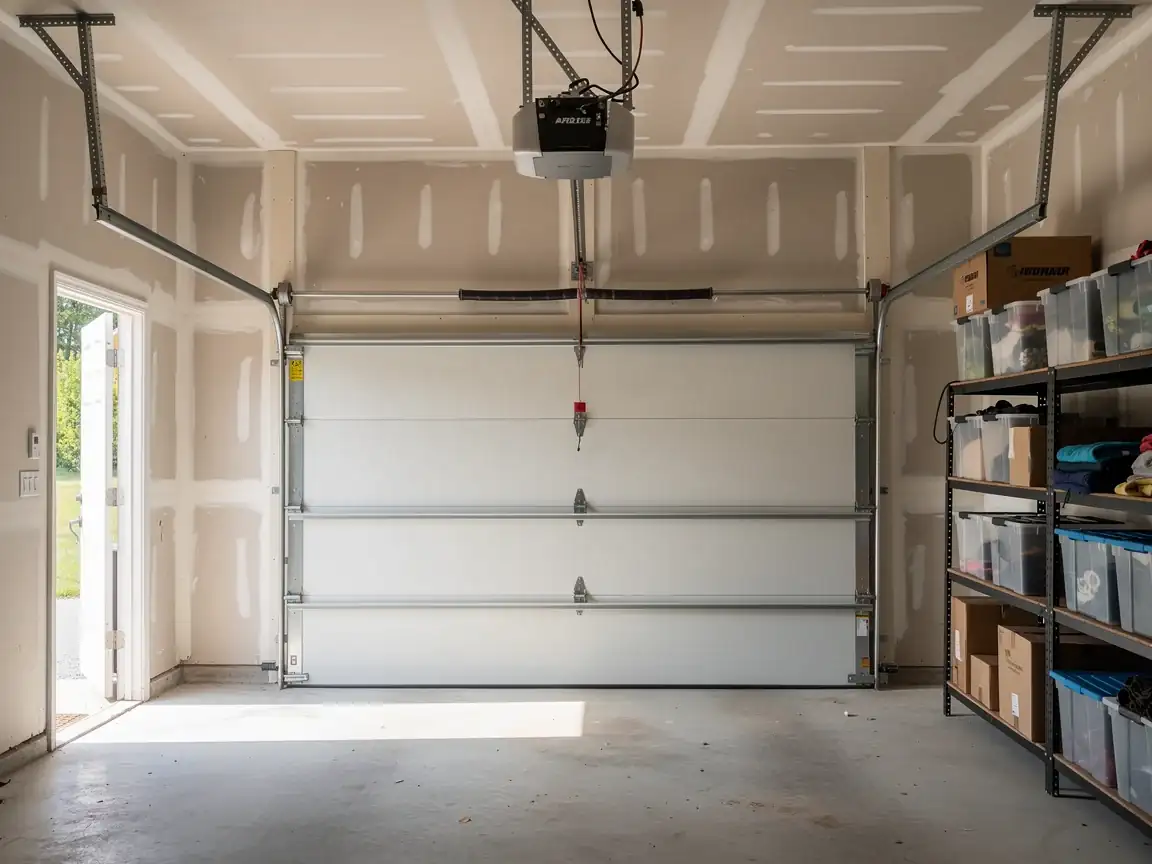
The complication is that Maitland's housing stock centers on a 1996 median build year. That's squarely in the era when builders installed chain-drive openers with early circuit-board logic - no rolling code, no built-in safety-reversal sensors beyond the bare minimum, and boards that were never designed to run thirty years. A homeowner calling about a dead opener in a 1996 house is usually not calling about a simple capacitor. They're calling about a unit that's aged out.
Why This Fails Locally
Across the wider service area the housing stock runs from 1964 to 2004, with a median around 1984 - a decade older than Maitland's own median. That ten-to-twelve-year gap matters because it's roughly the gap between a mechanical limit-switch opener and the first generation of circuit-board openers with photo-eye safety sensors. Houses built closer to 1996 in Maitland are more likely to have the board-based units, which fail differently than the pure mechanical ones: not with a snapped gear, but with a board that corrodes, a capacitor that swells, or a motor that hums and won't engage.
Our region's climate is mild year-round, so we don't get the freeze-thaw cycling that kills openers in colder states. What we get instead is steady heat and humidity working on those boards for twenty-five-plus years straight. In a 1996-built Maitland garage, that's two and a half decades of warm, humid air moving through an attached garage every single day - slow corrosion rather than sudden failure, which is why these openers tend to go intermittent before they go dead.
What the Fix Involves
01
First call is almost always diagnosis, not a part swap sight unseen
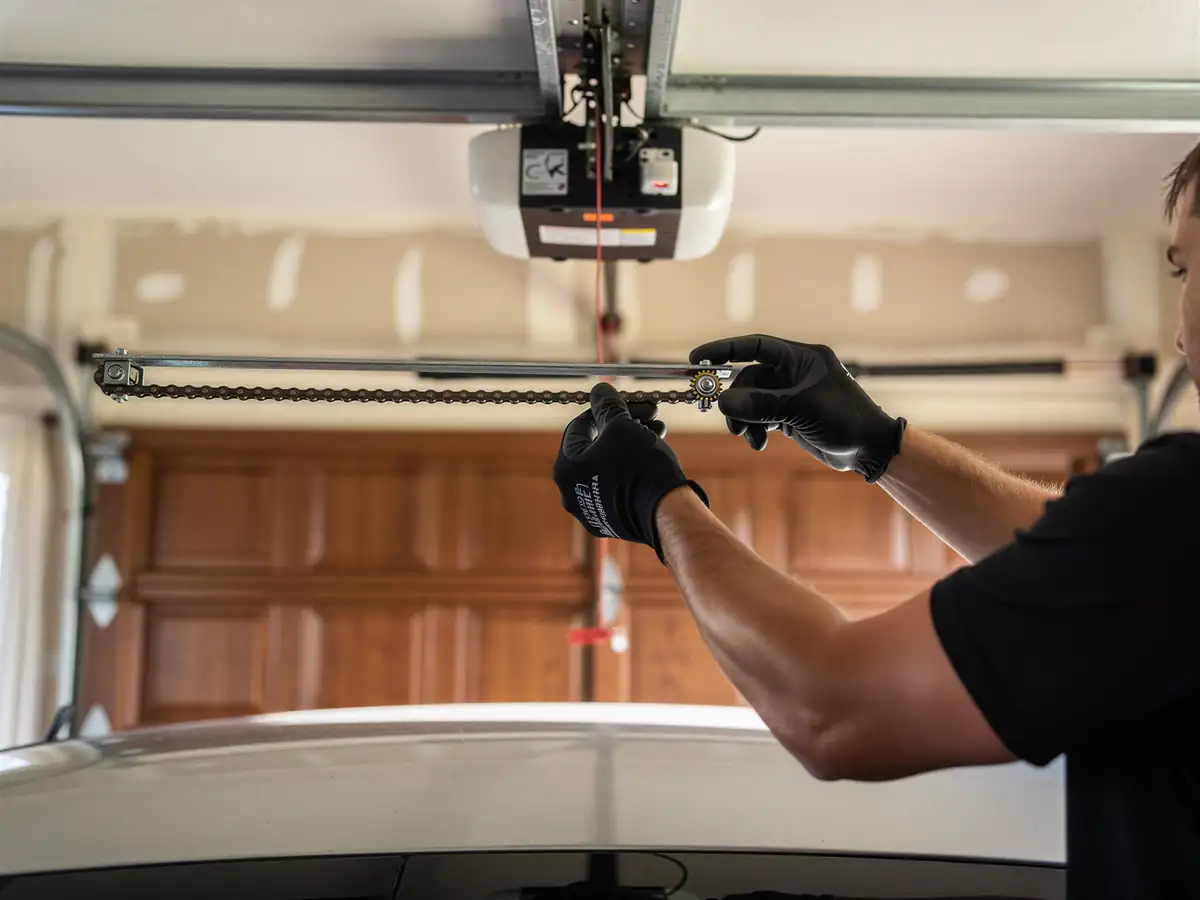
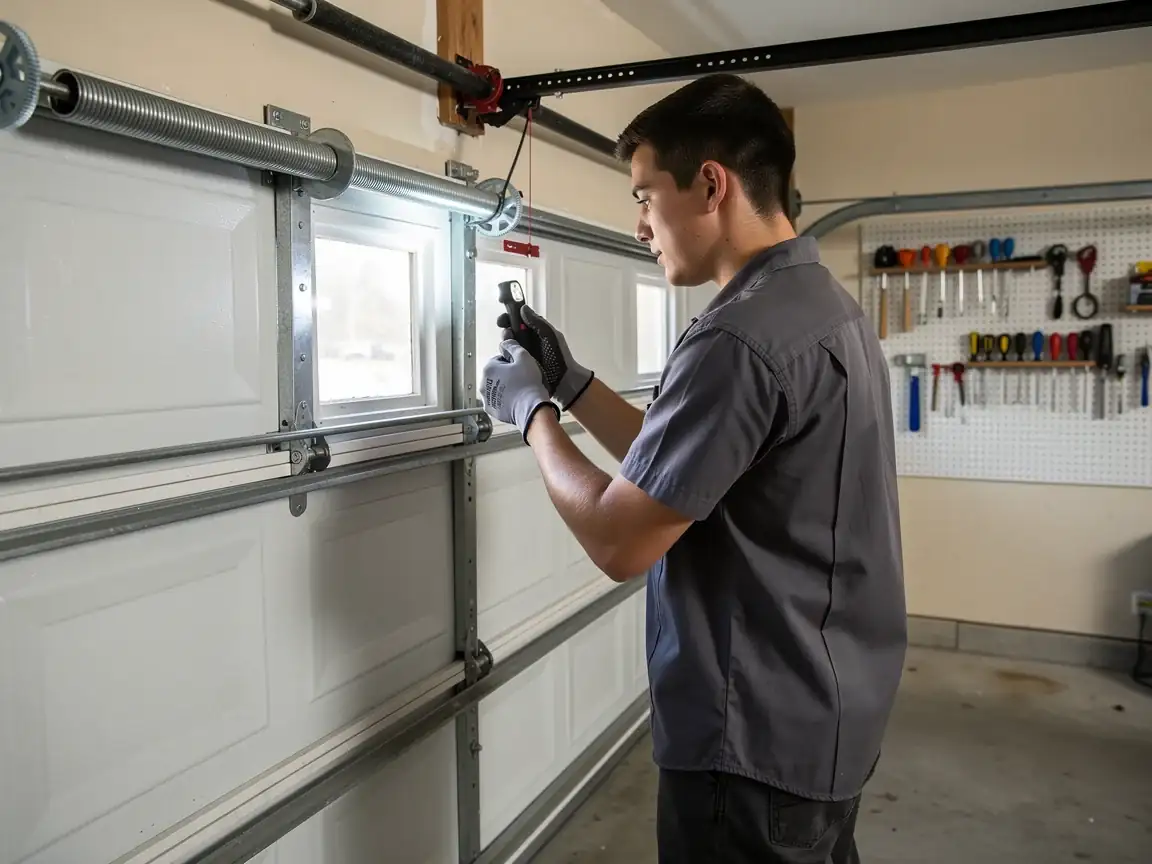
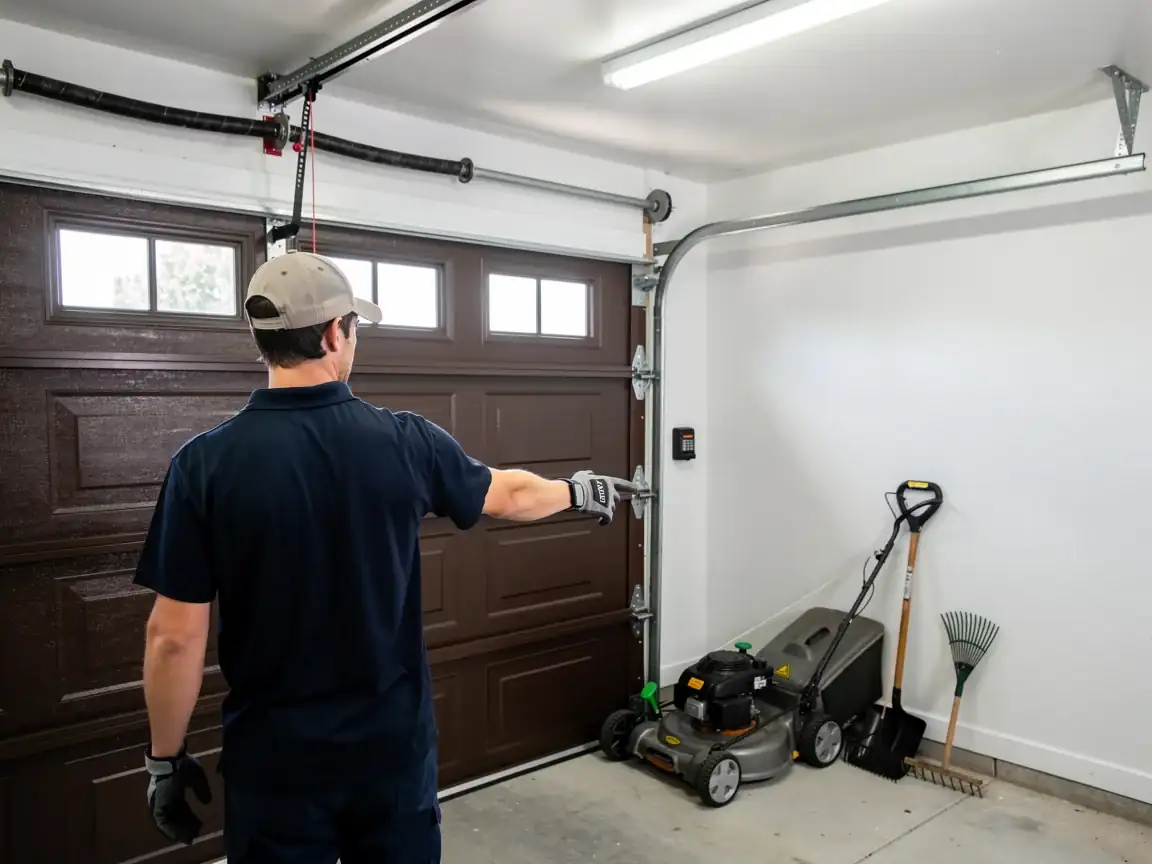
We check the logic board, the motor windings, the travel module, and the safety sensors separately, because on a unit this age more than one of them is usually marginal even if only one has failed outright. If it's a single bad capacitor or a dead sensor eye, that's a straightforward repair and we tell you so.
02
If the board itself has gone or the motor is drawing wrong current
Common on openers original to a mid-90s build - repair stops making sense. We'll say that plainly rather than selling a patch that fails again in a year. One limitation worth being honest about: we don't carry parts for every chain-drive unit from that era on the truck, since manufacturers stopped stocking some of those boards years ago. If your exact model is one of them, replacement is the only real option, and we'll tell you that on the spot instead of ordering a part that may not show up.
The Symptom
The pattern we hear most from Maitland callers: the opener runs the motor but the door doesn't move, or it moves partway and reverses. On a unit this age that's almost always the board losing its grip on the limit settings, not the drive gear - though we still check the gear, because a stripped nylon gear on a chain-drive unit from the 90s is common enough to rule out first.
A second pattern: the remote works intermittently, then not at all, while the wall button still opens the door. That points to the receiver board losing its signal memory, which on a unit built before rolling-code became standard often means the whole logic board needs replacing rather than just the remote. Either symptom on a house from this era is worth a call before you're stuck troubleshooting a part nobody stocks anymore in the driveway at 7 a.m.
How it works
From “it’s stuck” to “it’s fixed”
01
Tell us what’s wrong
Describe the symptom - won’t open, loud bang, opener runs but the door won’t move.
02
On-site diagnosis
A technician tests the door under power and by hand and finds what actually failed.
03
Clear, up-front plan
You get the fix that’s needed and what drives the cost - before any work starts.
04
Repaired & tested
The repair is done, the door is set true and tested, and the work area left clean.
Not sure which repair your door needs in Casselberry, FL? Describe what it’s doing - every job starts with a diagnosis.
Straight answers about garage door repair in Casselberry. Still unsure? Ask us directly.
Is it worth repairing an opener in a house built in the mid-1990s, or should I just replace it?
At the income level typical for Maitland, most homeowners come out ahead replacing rather than repairing once the board itself is the problem, since a new DC opener with battery backup costs only a bit more than a board swap on a unit that age. If it's a simple sensor or capacitor, repair still makes sense - we'll tell you which situation you're in.
Do you have a shop in Maitland?
No. We're based in Casselberry, about 4 miles away, and cover Maitland from there. There's no local branch or depot - we come to you.
Why does my opener work sometimes and not others?
On openers original to houses built around 1996, intermittent failure usually points to the logic board losing its limit or signal memory, not the motor. Humidity and heat over two and a half decades slowly degrade these boards even without any sudden event to blame.
Can you get parts for an opener this old?
Sometimes. Some chain-drive boards from the mid-90s are no longer manufactured, and if yours is one of them, repair isn't an option and replacement is the honest answer. We check parts availability before we quote a repair, not after.