Casselberry Garage Door Pros serves Longwood homes built mostly in 1980, 3 miles from our shop, with torsion spring repair, opener swaps, and panel replacement for original 1980s hardware.
Longwood's housing stock centers on 1980, a few years earlier than the wider service area median of 1984. That gap matters more than it sounds like it should. A door and opener installed in 1980 came before the mid-80s shift toward lighter steel sections and more standardized torsion spring sizing. Homes here are more likely to still be running on original galvanized torsion springs that have outlived their wind cycle rating, or chain-drive openers from an early retrofit in the late 80s or 90s. We see more stripped gears on these older chain-drive units than we do on newer belt-drive installs elsewhere in the area.
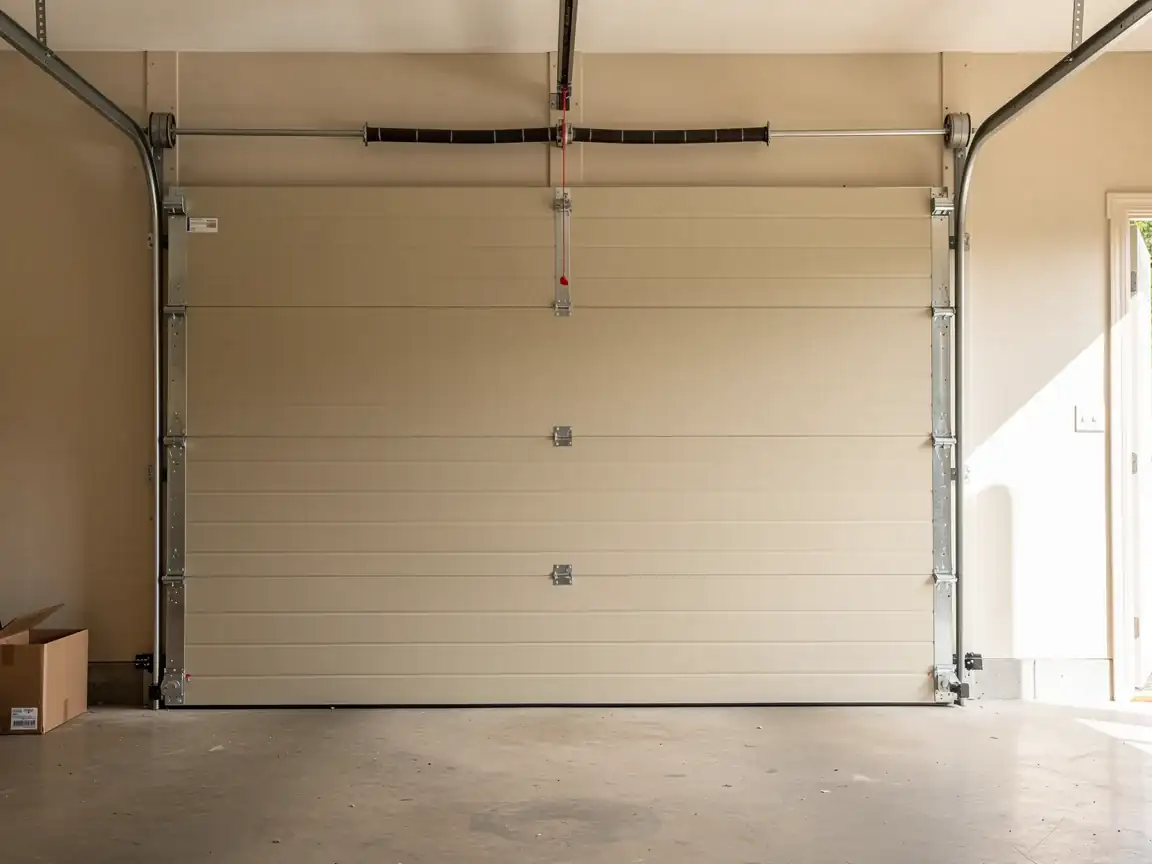
The doors themselves also tend to run a hair narrower in track spacing than what you'd find on a house built after 2000, so a generic big-box replacement door sometimes needs bracket work to fit the existing jamb. None of this is a crisis - it just means the job in Longwood is more often a hardware-matching job than a straight swap-and-go. We bring stock for both eras on the truck, but if a part is obsolete enough, we'll tell you straight that replacement beats forcing a repair.
The Usual Work Here
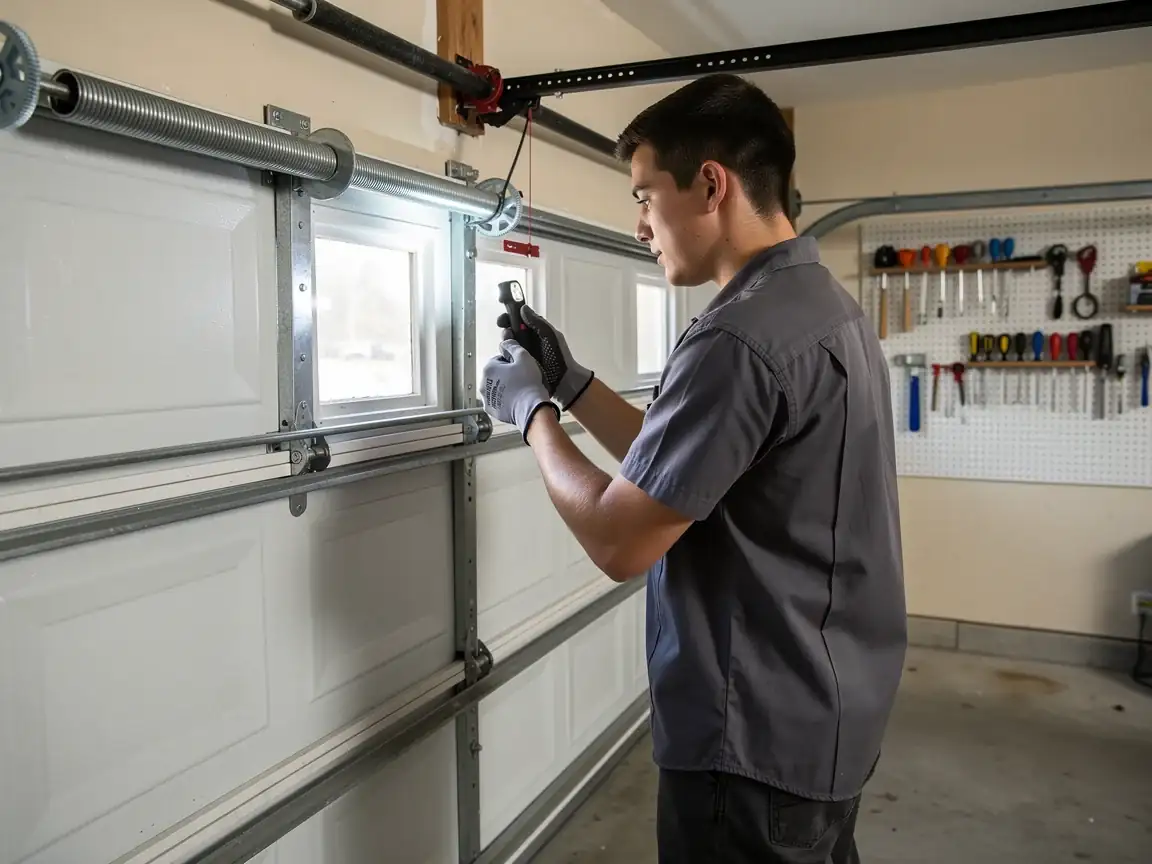
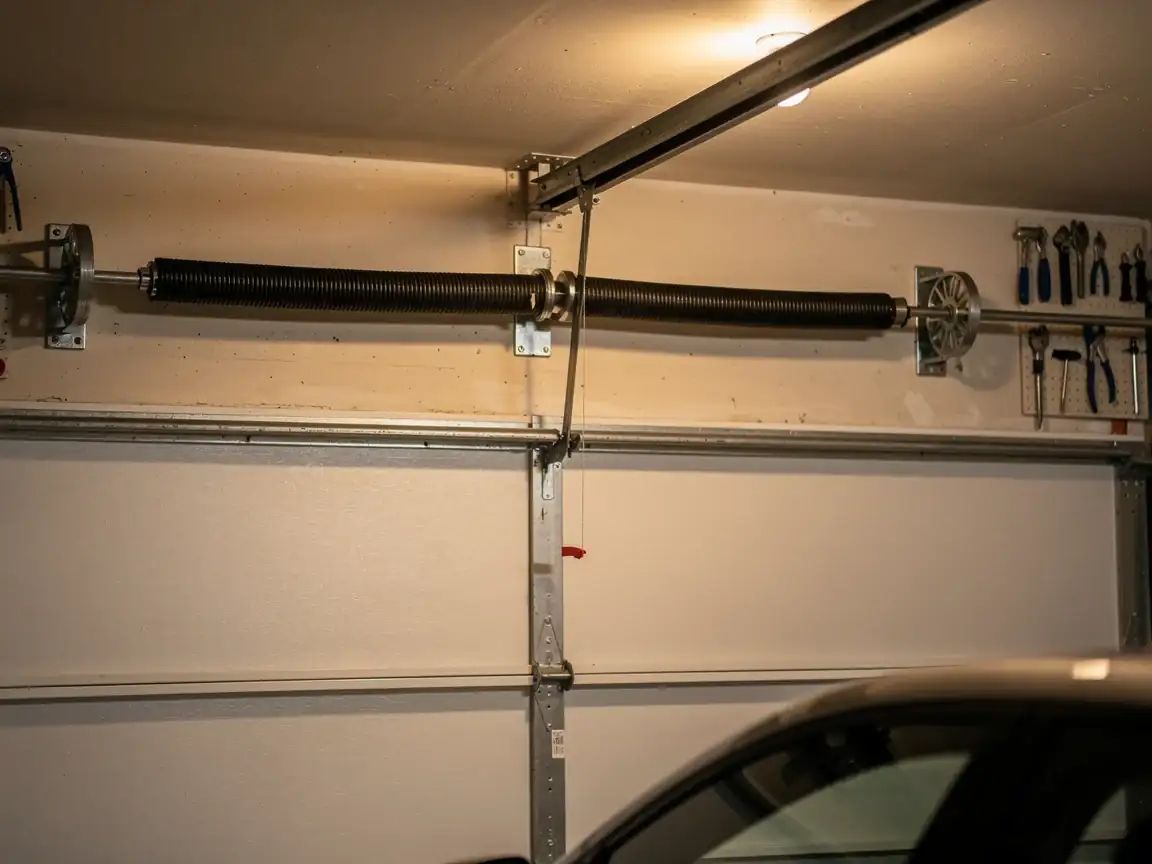
Torsion spring failure is the most common call we get from this part of the area, and it tracks with the age of the stock - a spring rated for a few thousand cycles in 1980 has had four decades to work through its life. Second most common: worn rollers and bent track on doors that have never been rebalanced, which puts extra strain on an opener motor that's already older than it should be.
We also replace a fair number of openers outright rather than repair them, since parts for units from the 80s and early 90s are often discontinued. That's the honest limitation here - if your opener logic board or a specific obsolete part isn't stocked anywhere, we're not going to pretend we can source it same-day. A new opener is usually the faster and cheaper call at that point.
Florida's mild, humid climate doesn't throw the hard freeze-thaw cycling that cracks concrete or seizes hardware up north, but the humidity does accelerate rust on unpainted torsion cable and exposed spring coils over the years, which is another reason springs here fail on schedule rather than early or late.
This Area's Housing
01
Longwood has roughly 6,031 households, smaller than the 155,817-household footprint we cover from Casselberry
And the median household income here runs about $77,214 - a bit below the wider area's $82,768 median. That income gap doesn't change what a job costs, but it does shape what we see: more owners stretching a repair as far as it'll go before replacing the whole door, and fewer full-door-and-opener package jobs than in the higher-income pockets of our coverage.
6,031 households
02
The area sits inside a housing stock that, across the broader region
Spans construction from 1964 to 2004. Longwood's own median of 1980 puts it on the older half of that range. That's consistent with what we find on service calls - more original hardware, more doors that have had one replacement cycle already, and fewer homes still on their first door and opener setup. It's a good area for spring and cable work, less so for warranty claims on recent builds, since there just aren't many of those here yet.
The Drive Over
Longwood sits about 3 miles from our shop in Casselberry, which keeps it a short, predictable drive for us - no highway crawl, no guesswork on timing. We don't run a depot or storefront in Longwood itself; every job here is a truck roll from Casselberry, same as the rest of our coverage area.
That short distance is worth mentioning because it's the kind of detail that actually changes the job, not just the marketing copy. A 3-mile run means we can carry a fuller stock of older-era torsion springs and chain-drive opener parts on the truck without worrying about a long haul back if something's missing, which matters given how much of Longwood's hardware dates to 1980 or shortly after.
How it works
From “it’s stuck” to “it’s fixed”
01
Tell us what’s wrong
Describe the symptom - won’t open, loud bang, opener runs but the door won’t move.
02
On-site diagnosis
A technician tests the door under power and by hand and finds what actually failed.
03
Clear, up-front plan
You get the fix that’s needed and what drives the cost - before any work starts.
04
Repaired & tested
The repair is done, the door is set true and tested, and the work area left clean.
Not sure which repair your door needs in Casselberry, FL? Describe what it’s doing - every job starts with a diagnosis.
Straight answers about garage door repair in Casselberry. Still unsure? Ask us directly.
Why does my 1980s garage door spring keep breaking?
A torsion spring is rated for a set number of open-close cycles, usually somewhere around 10,000. A spring installed when your house was built in 1980 has had over four decades to use that up, and once it's past its rated life, fatigue failure is normal wear, not bad luck. Replacing both springs as a pair, even if only one broke, is the standard fix.
Do you have a shop in Longwood?
No. We're based in Casselberry, about 3 miles away, and we run every Longwood job as a truck call from there. We don't claim a storefront or depot here - just a short, reliable drive.
Is it worth repairing an opener from the 1980s or 90s?
Sometimes, but often not. If the motor and logic board still work and it's a belt or chain issue, repair makes sense. If the control board itself has failed, parts for units that old are frequently discontinued, and a new opener ends up being the faster, cheaper option.
Does Florida humidity affect garage door hardware here?
Yes, more than temperature swings do. The mild, humid climate here accelerates rust on exposed torsion cable and spring coils over time, which is part of why older springs in this area tend to fail on a fairly predictable schedule rather than lasting indefinitely.