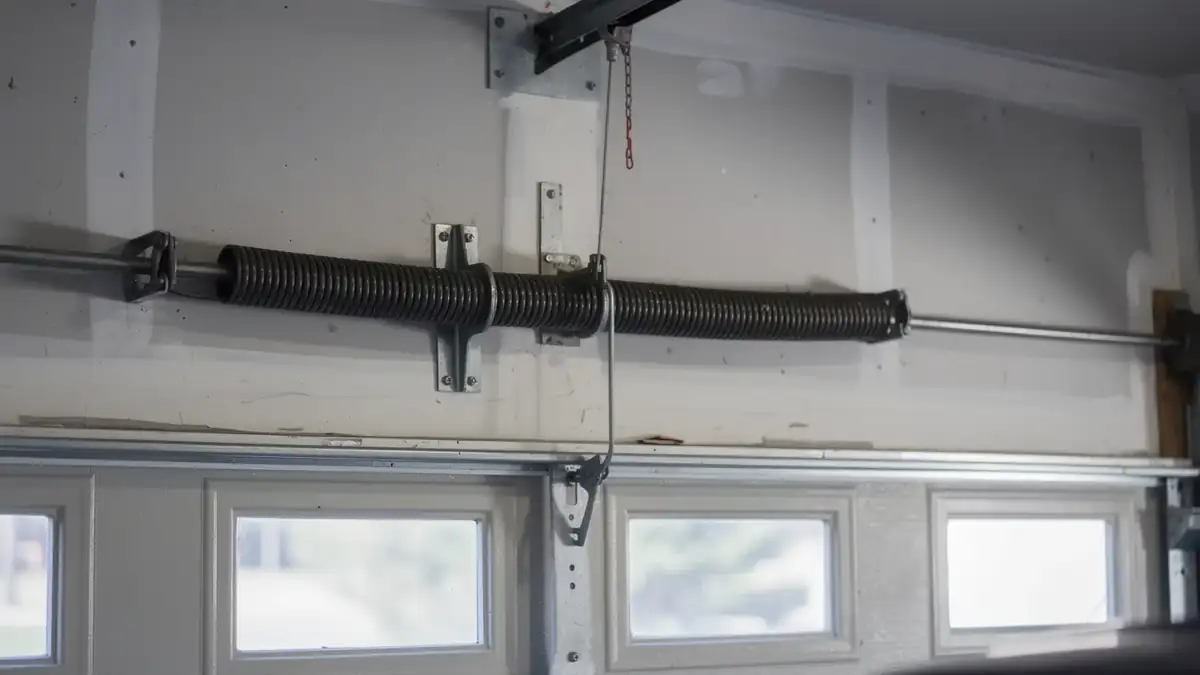
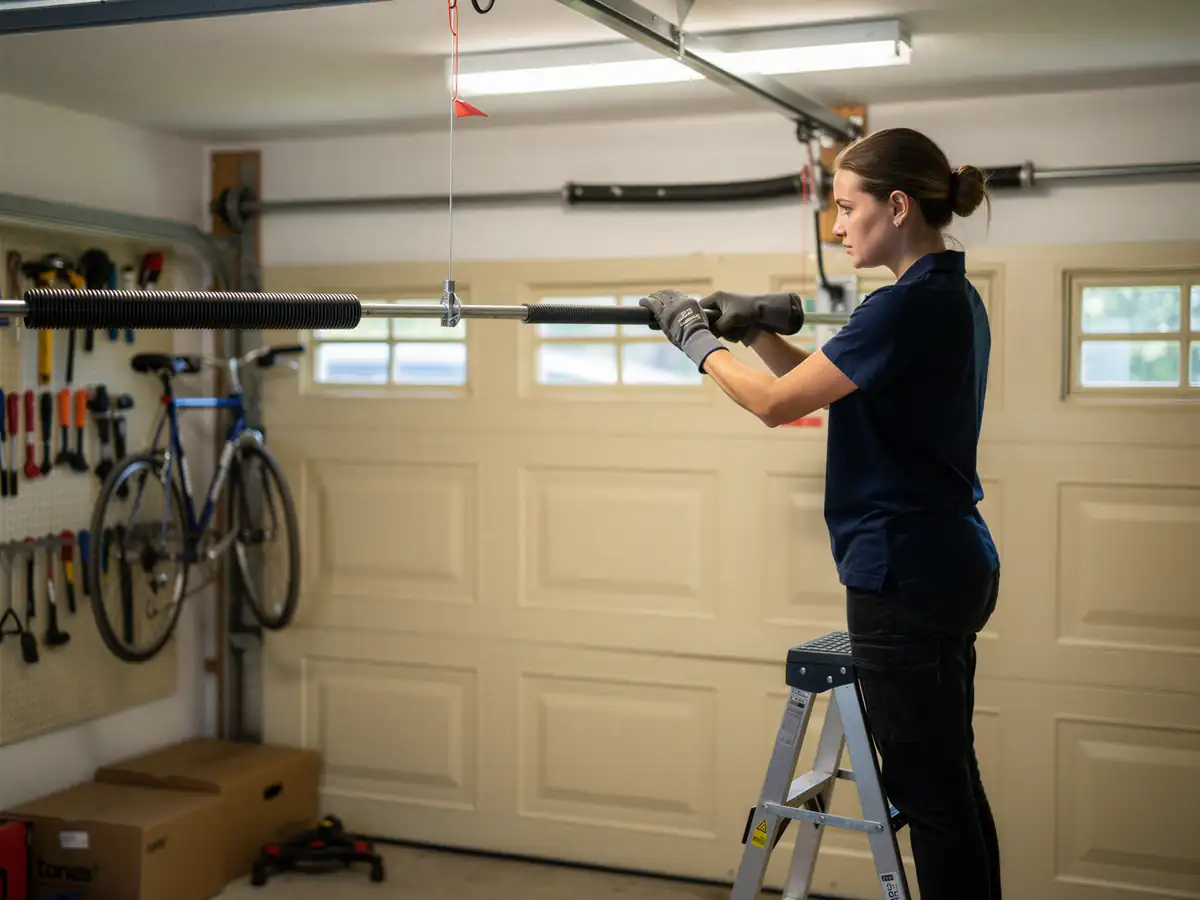
Most houses in this part of the Orlando area went up between 1964 and 2004, with the median build year sitting around 1984. That matters more than people think. If your door and opener are original to a house from that era, or close to it, you're dealing with hardware that's been under tension for three or four decades. A torsion spring you can grease and adjust yourself. A torsion spring that's corroded at the coil ends and could unwind with enough force to break a hand is not a DIY job, full stop.
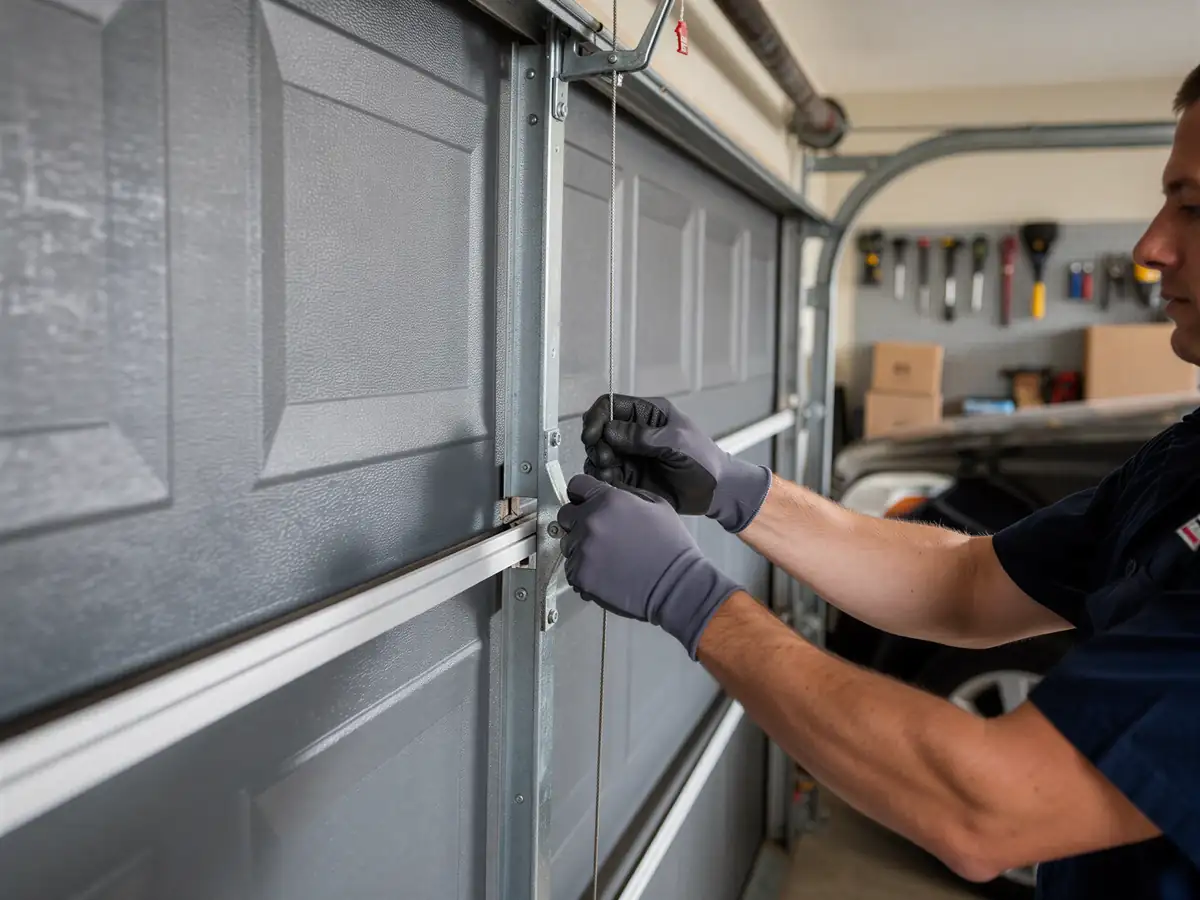
Same goes for cables that have frayed strands, or a bottom bracket that's rusted to the point the bolts won't turn. If the door is original to a build from the 1980s or 90s - which is most of the stock around here - the hardware is original too, unless someone's already swapped it. Lifting panels off hinges, popping a stuck door with a crowbar, forcing an opener that's grinding: these end a DIY afternoon in an ER visit, not a fixed door.
One honest limit: if the spring's already snapped and the door is down, we don't recommend anyone without the right bars and clamps try to release the remaining tension themselves. That's the one call where waiting for a truck costs you less than saving on a service fee.
What the Weather Here Does to It
Casselberry sits in a mild temperate band - we don't get the hard freezes that snap springs brittle overnight the way a northern winter does. What we get instead is humidity, and a lot of it, stacked up over a door that might be 30 or 40 years old if it's original to the 1964-2004 housing wave that built most of this area.
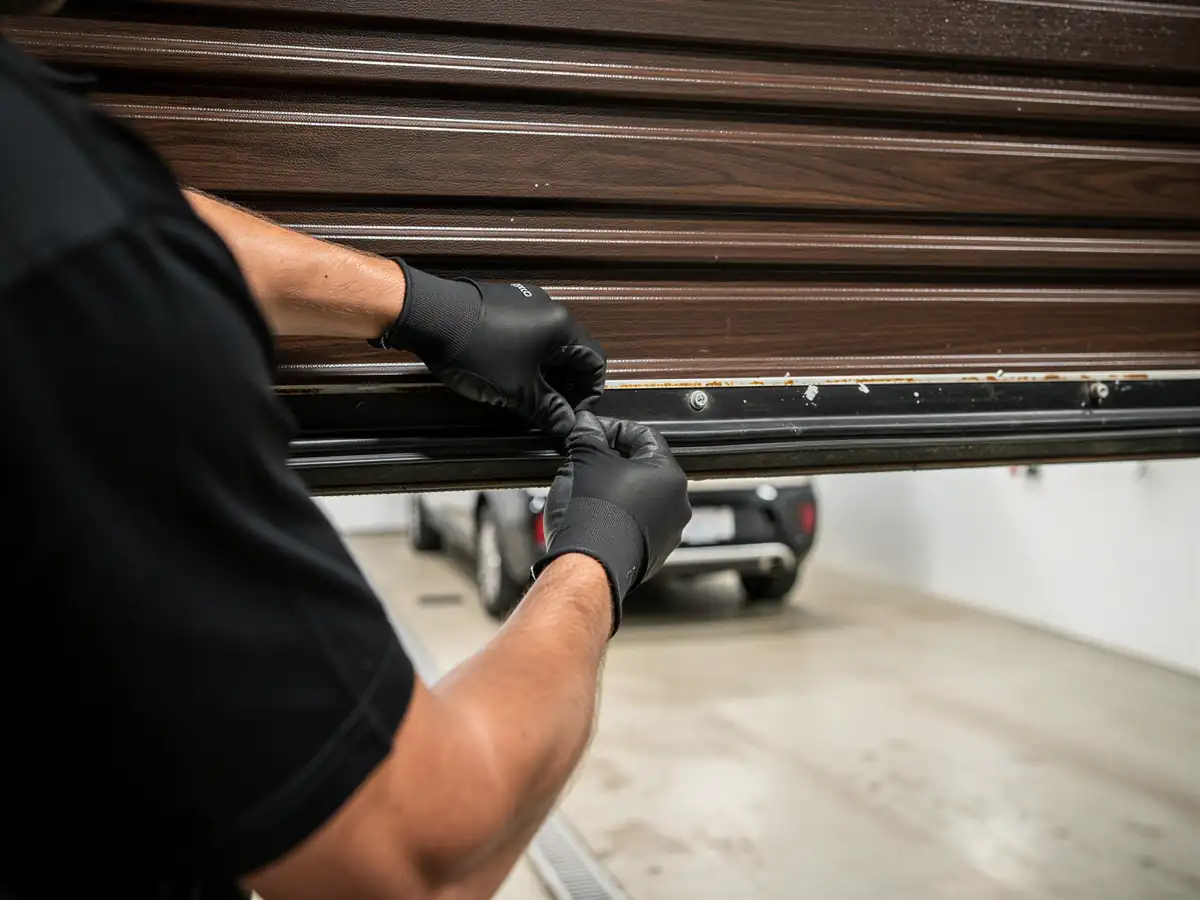
Humidity doesn't announce itself with one dramatic failure. It works slow: rust creeping along spring coils, galvanized coating wearing thin on tracks, steel cable strands corroding from the inside where you can't see it until one gives. Wood composite panels on older doors can swell slightly during the wet months and bind against the frame, which then puts extra load on the opener motor every single cycle.
UV is the other one nobody budgets for. A door facing west or south in full Florida sun fades and gets brittle at the weatherstripping and the plastic idler bearings years before the steel itself gives out. None of this is a one-season event. It's accumulation, and on a door that's already pushing several decades old, accumulation is the whole story.
The Problem
01
Across the roughly 76,765 owner-occupied houses in this service area
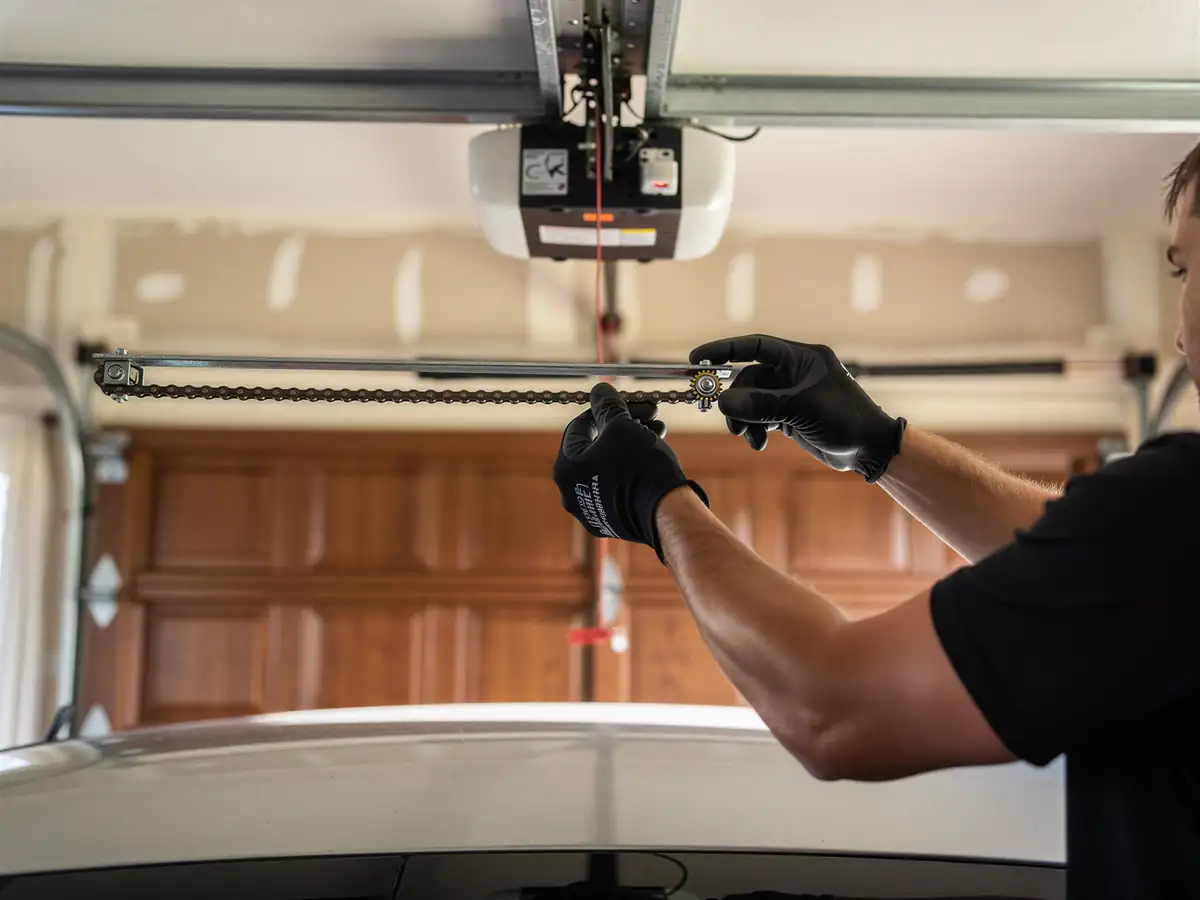
A lot of garage doors are reaching the point where the opener's motor and gear set - not the spring - are the weak link. Openers from the 1990s and early 2000s were built with less sophisticated circuit boards and no battery backup, and a lot of them are still running because they haven't fully died, just gotten slow, loud, or unreliable about reversing.
76,765 owner-occupied
02
With 155,817 households across the broader area and a median household income of $82,768
We see a pretty consistent pattern: homeowners patch a symptom - a new remote, a lubed track - without addressing that the whole unit is original to a house built decades ago. That's a reasonable short-term call. It's not a long-term one.
155,817 households
$82,768 median household income
03
The real problem isn't any single broken part
It's that doors from this era were engineered to a lower safety standard than what's sold today - no auto-reverse sensors on some of the oldest installs, single-point attachment on brackets that current code wouldn't allow. Fixing the spring doesn't fix that. At some point the conversation shifts from repair to whether the whole unit needs to come out.
The Seasonal Bit
We don't get a hard winter here, so there's no single week where everyone's spring snaps at once the way it happens up north. What we do get is a wet season that runs the humidity up for months, and that's when rust-weakened springs and corroded cables tend to finally let go - not because of cold, but because moisture has been working on the metal all year and the wet season is where it catches up.
We see the same pattern from here out to Longwood three miles north and Maitland four miles south: doors original to a 1980s build still running on their first set of springs, still fine until a humid stretch pushes a half-rusted coil past its limit. Fern Park, two miles up the road, and Goldenrod, four miles out, show the same age of housing stock and the same failure pattern.
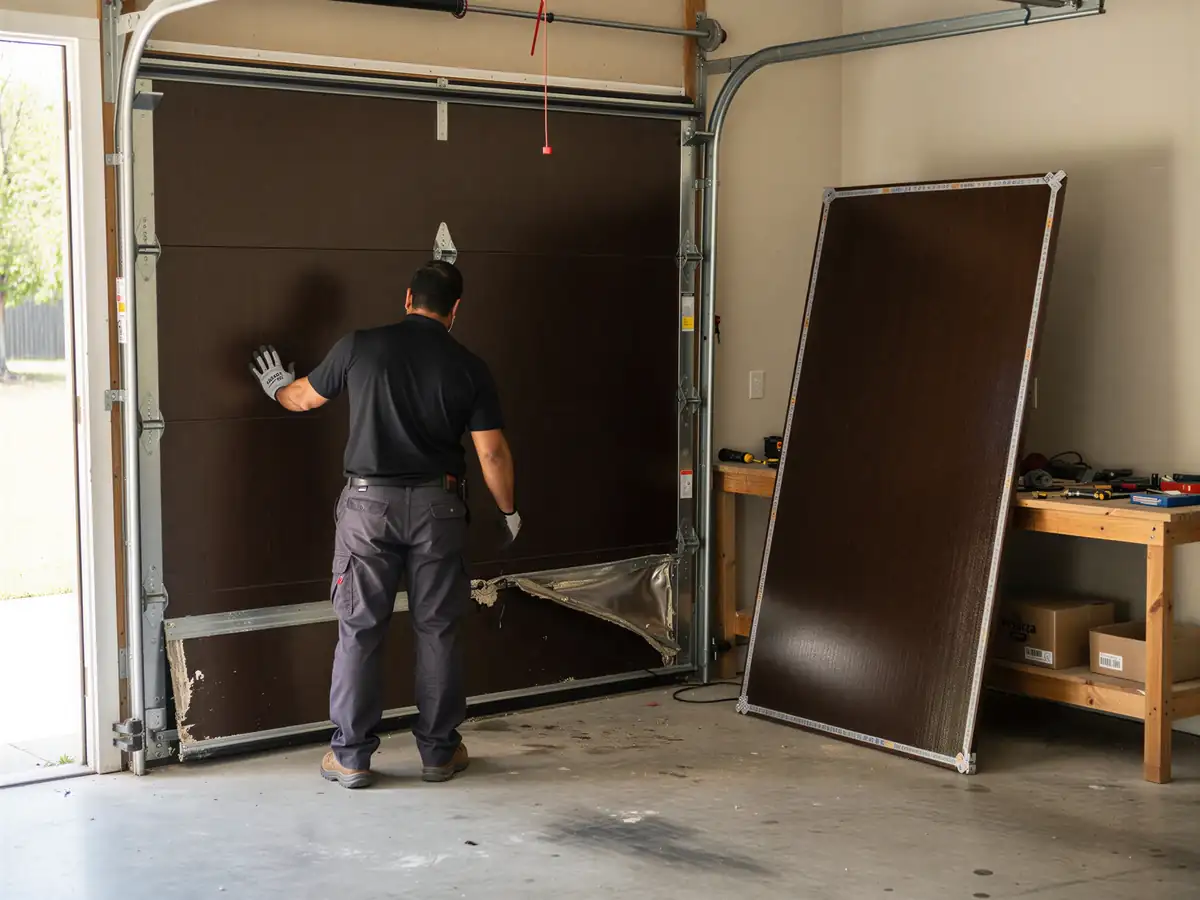
With a median household income of $82,768 across the area, replacement often makes more financial sense than stacking repairs on a door that's 35-plus years old and already showing rust at the spring anchors. A spring swap buys a year or two. A full door swap stops the yearly call.
How it works
From “it’s stuck” to “it’s fixed”
01
Tell us what’s wrong
Describe the symptom - won’t open, loud bang, opener runs but the door won’t move.
02
On-site diagnosis
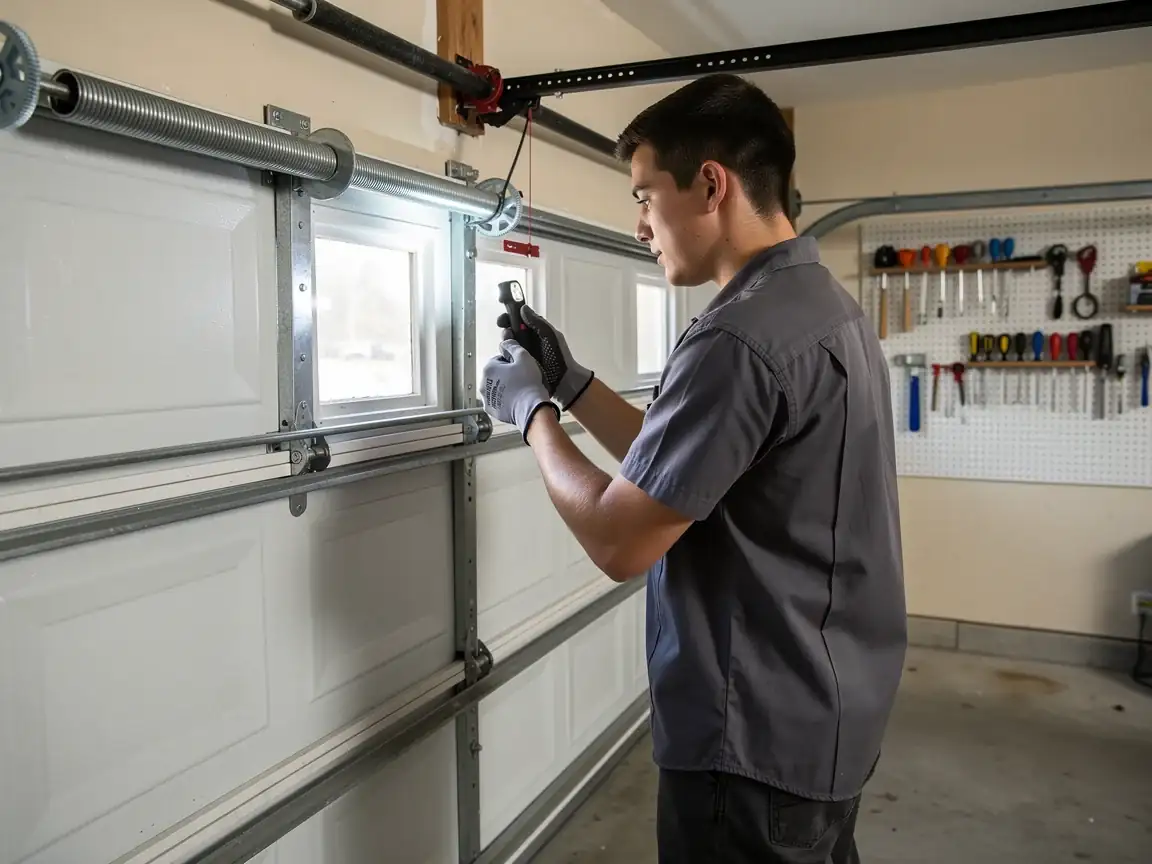
A technician tests the door under power and by hand and finds what actually failed.
03
Clear, up-front plan
You get the fix that’s needed and what drives the cost - before any work starts.
04
Repaired & tested
The repair is done, the door is set true and tested, and the work area left clean.
Not sure which repair your door needs in Casselberry, FL? Describe what it’s doing - every job starts with a diagnosis.
Straight answers about garage door repair in Casselberry. Still unsure? Ask us directly.
How old does a garage door have to be before repair stops making sense?
There's no single number, but if your house was built in the 1964-2004 range that covers most of this area, and the door is original, you're already past the point where parts and labor on repeated repairs start costing close to half a replacement. Rust at the spring anchors or a cracked bottom panel usually tips it toward replacement.
Does Florida humidity really matter more than cold for garage doors here?
Yes. Casselberry's mild temperate climate means springs rarely see a hard freeze, but sustained humidity corrodes spring coils, cables, and track hardware steadily over years. On a door original to a 1980s or 90s build, that slow corrosion is usually the real cause of failure, not any single weather event.
My opener is from the 1990s and still works - do I need to replace it?
It depends on what it's missing. Many openers from that era lack auto-reverse safety sensors and battery backup that current standards include. If it's running fine day to day, that's not an emergency, but we'd flag the missing safety features as a reason to plan a replacement rather than wait for a failure.