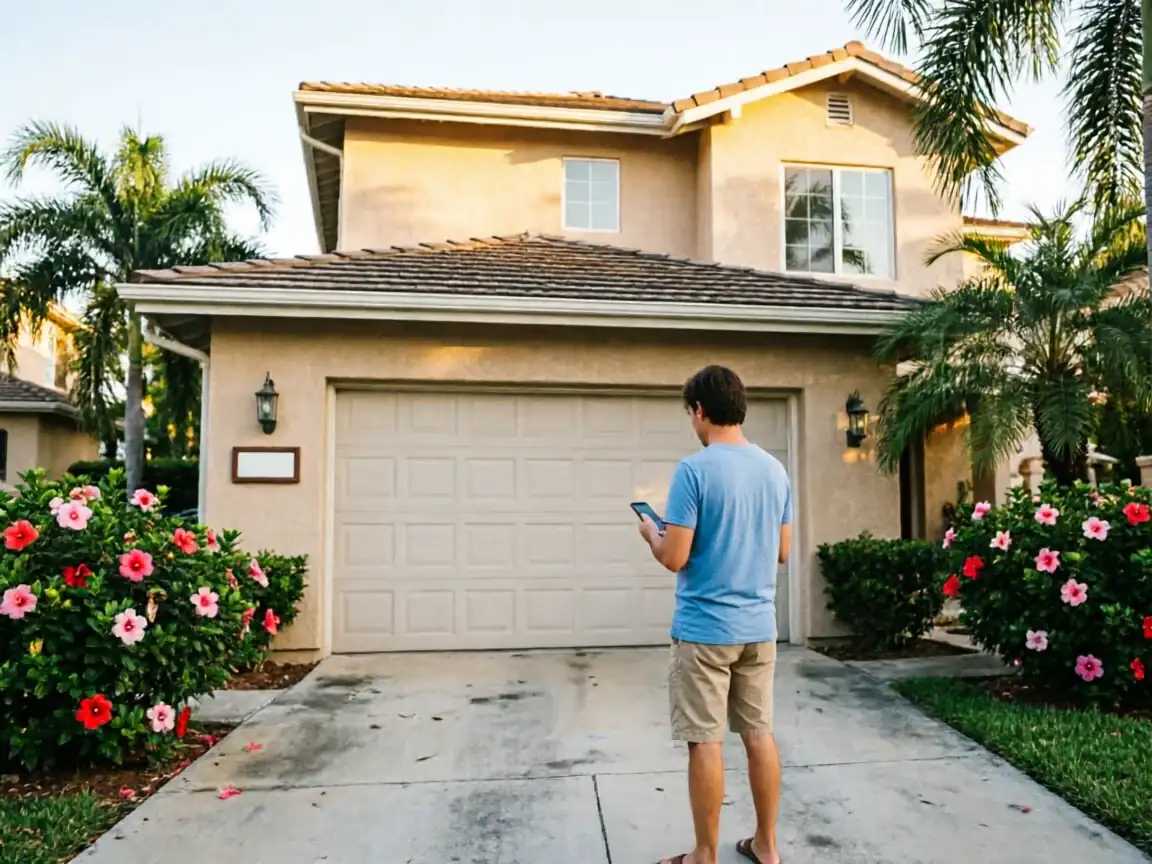
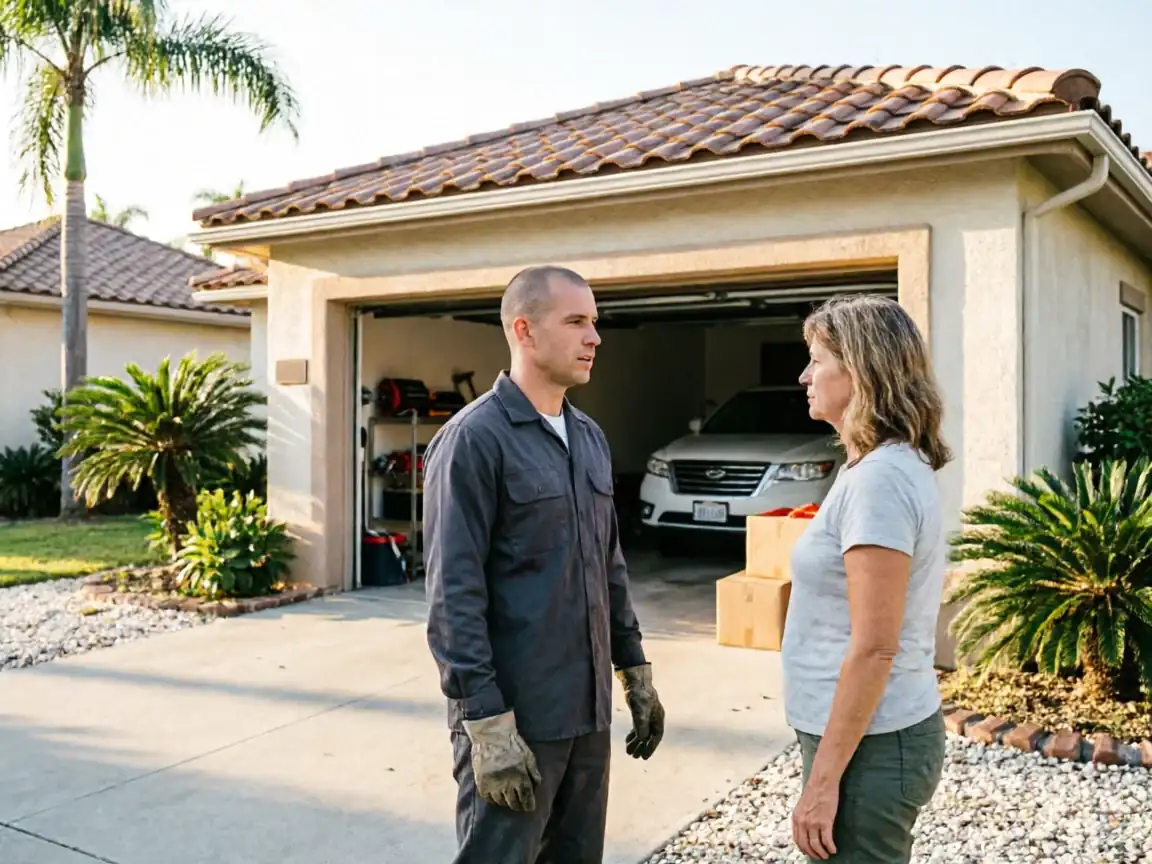
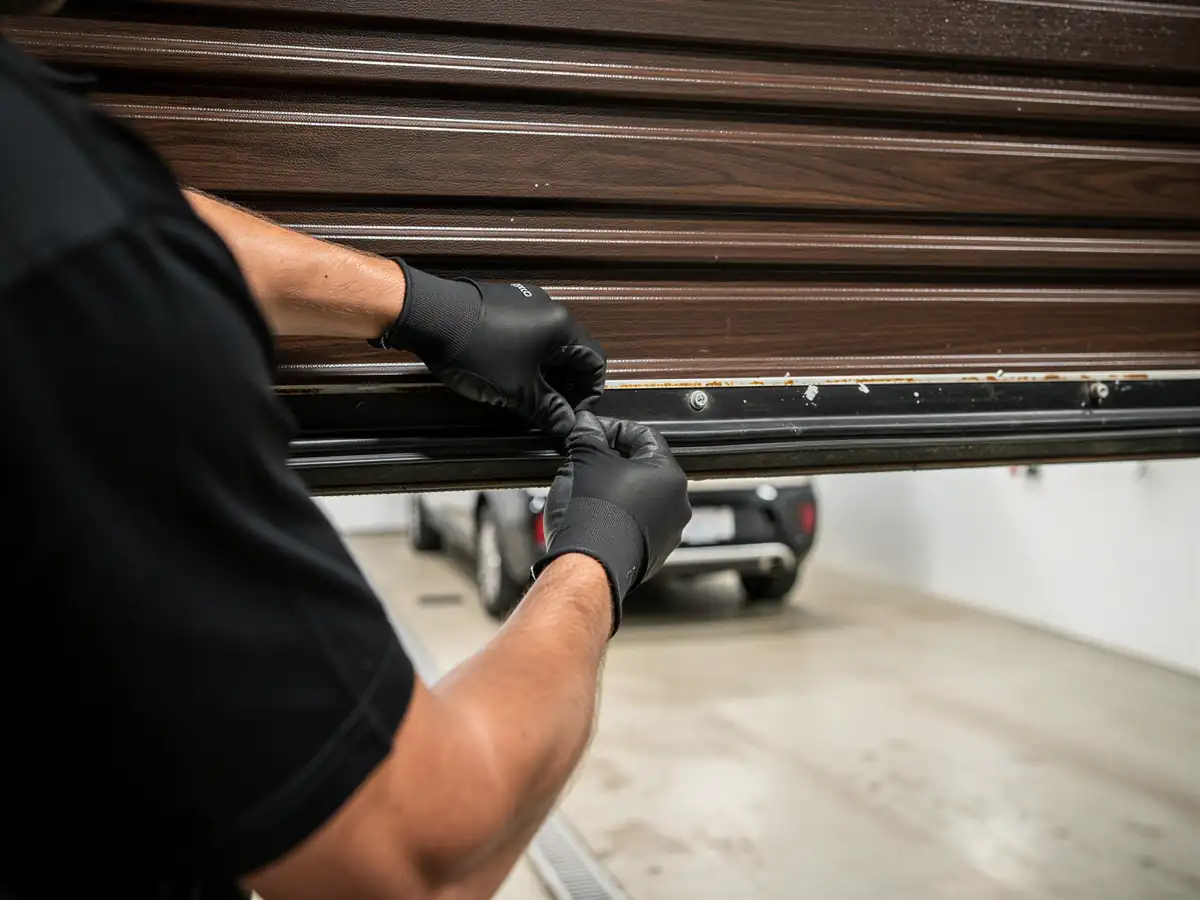
Casselberry homes built 1964-2004 run openers with photo-eye sensors that drift out of line over decades. Here's why, and when it's more than a quick fix.
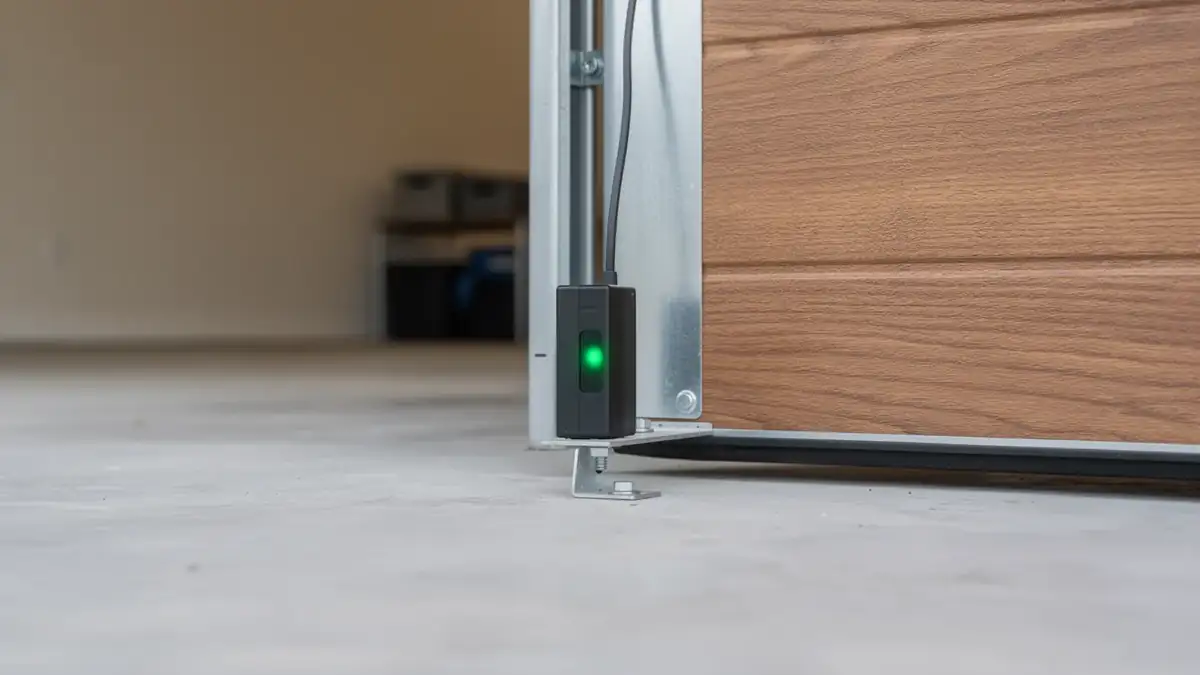
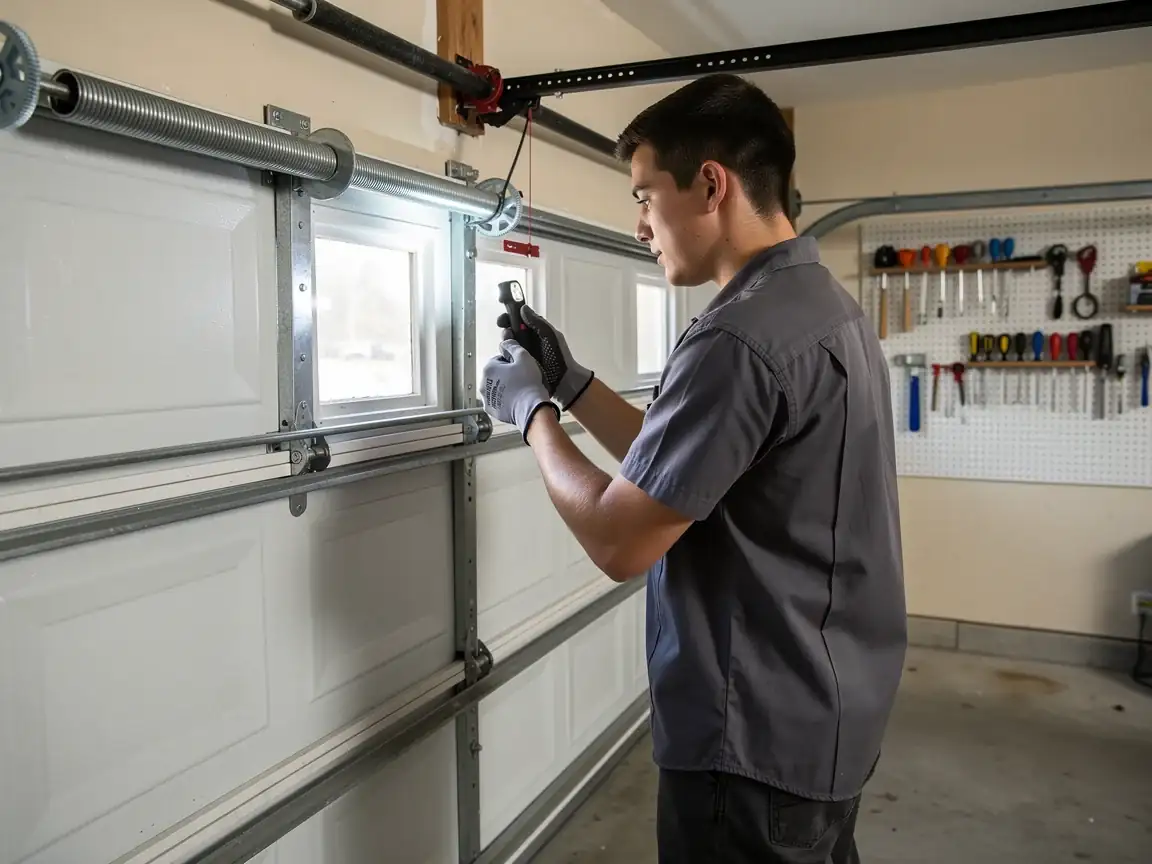
Nudging a sensor back into place with your hand is a five-minute fix the first couple of times. After that, if it keeps happening, you're not looking at a bump - you're looking at a bracket that's worn its mounting slot loose or a door track that's shifted a fraction out of plumb. Most of the openers in this area went in somewhere between 1964 and 2004, with the heaviest concentration from the 1980s and 90s, which means a lot of these sensor brackets are original equipment riding on steel that's 25 to 45 years old. At that age, the sheet metal the bracket clips to has usually flexed enough times that it no longer holds a true line without help. If you've re-aimed the same sensor more than three or four times this year, that's your signal to stop guessing and have someone check the track alignment behind it, not just the sensor itself. We'll say plainly: if the bracket itself is cracked or the wire insulation has gone brittle, that's a part swap, not an adjustment - and it's worth doing before the drift turns into a door that won't close at all and a trip hazard you're stepping around every morning.
What the Weather Here Does to It
This is a mild temperate climate, so we're not dealing with frost heave cracking slab foundations or ice jamming tracks the way colder regions do. What we get instead is steady humidity and sun exposure working on the plastic sensor housings and their rubber grommets, year after year, without a hard winter to interrupt the cycle. UV breaks down the plastic lens cover slowly, and once it clouds or hairline-cracks, the beam the sensor sends scatters just enough to make the alignment look fine by eye while the opener still reads it as blocked. Humidity gets into the wire connections at the base of the bracket and corrodes the contact points over time, which shows up as an intermittent fault - door closes fine some days, reverses for no visible reason on others. Because there's no deep freeze to force a seasonal reset or an obvious crack to point to, these faults build quietly. Homeowners often chase the wrong cause - track, springs, the opener logic board - before anyone checks whether the sensor itself has simply aged out in this climate.
The Problem
The actual failure point is rarely the sensor's electronics. It's almost always the mechanical bracket holding it, or the thin wire running from sensor to opener, both of which take the brunt of years of minor bumps, lawn equipment, bikes leaned against the door frame, and the house itself settling. Across the broader service area there are 76,765 owner-occupied houses, a large share of them from that 1964-2004 build window, and the sensor hardware on most of them has never been replaced since the door or opener went in. A bracket that's been bent back into alignment by hand a dozen times over two decades eventually won't hold a line no matter how carefully you aim it, because the metal itself has fatigued. At that point, re-aiming isn't the fix - a new bracket, sometimes a new sensor pair entirely, is. We won't talk you into replacing an opener over a sensor problem. If the opener logic and motor are sound, swapping the sensor pair and brackets is a small job, usually done in under an hour, and it's not worth more than that unless something else is actually wrong.
The Seasonal Bit
The rainy stretch of the year is when sensor drift complaints spike here, and it's not coincidence. Water intrusion at the base of an aging bracket, combined with the humidity this climate holds onto even between storms, speeds up the corrosion on contact points that were already marginal from age. Doors that have been fine all dry season suddenly start reversing halfway down, or the indicator light on the sensor starts flickering instead of holding steady. It's worth checking your sensor alignment and wiping down both lenses before the wet months start, especially if your door dates to that common 1980s-90s build era - not because the plastic lens fogs from temperature swings the way it might up north, but because years of grime and condensation cycling on the lens face are enough on their own to scatter the beam. A five-minute check with a dry cloth, done before the season turns, catches most of what would otherwise become an emergency call once the rain sets in.
Straight answers about garage door repair in Casselberry. Still unsure? Ask us directly.
Why does my garage door reverse for no reason some days and not others?
That's the classic sign of a drifting or corroding safety sensor, not a mechanical door fault. In this climate, humidity gets into the wire contacts at the sensor base and causes an intermittent read rather than a clean failure - so it works fine some days and misreads on others, especially after damp weather.
Is it normal for sensors to need re-aiming every few months?
No. Occasional bumps from stored items or bikes happen, but if you're re-aiming the same sensor repeatedly, the bracket has likely fatigued from years of flexing, common in openers from the 1964-2004 build era still running their original hardware. At that point the bracket needs replacing, not just the sensor's aim.
Can I just disconnect the sensors if they keep causing problems?
You can disable them, but you shouldn't. They're a safety feature, and running without them means the door won't stop or reverse if something or someone is in its path. A bracket and sensor swap is a small job compared to the risk of leaving them bypassed.
How do I know if it's the sensor or something else in the opener?
If the indicator lights on both sensors glow steady when aligned and the door still misbehaves, the issue is likely elsewhere - the opener logic board or the travel limits. If the lights flicker or won't hold a steady glow even when freshly aligned, the sensor pair or wiring is the problem.