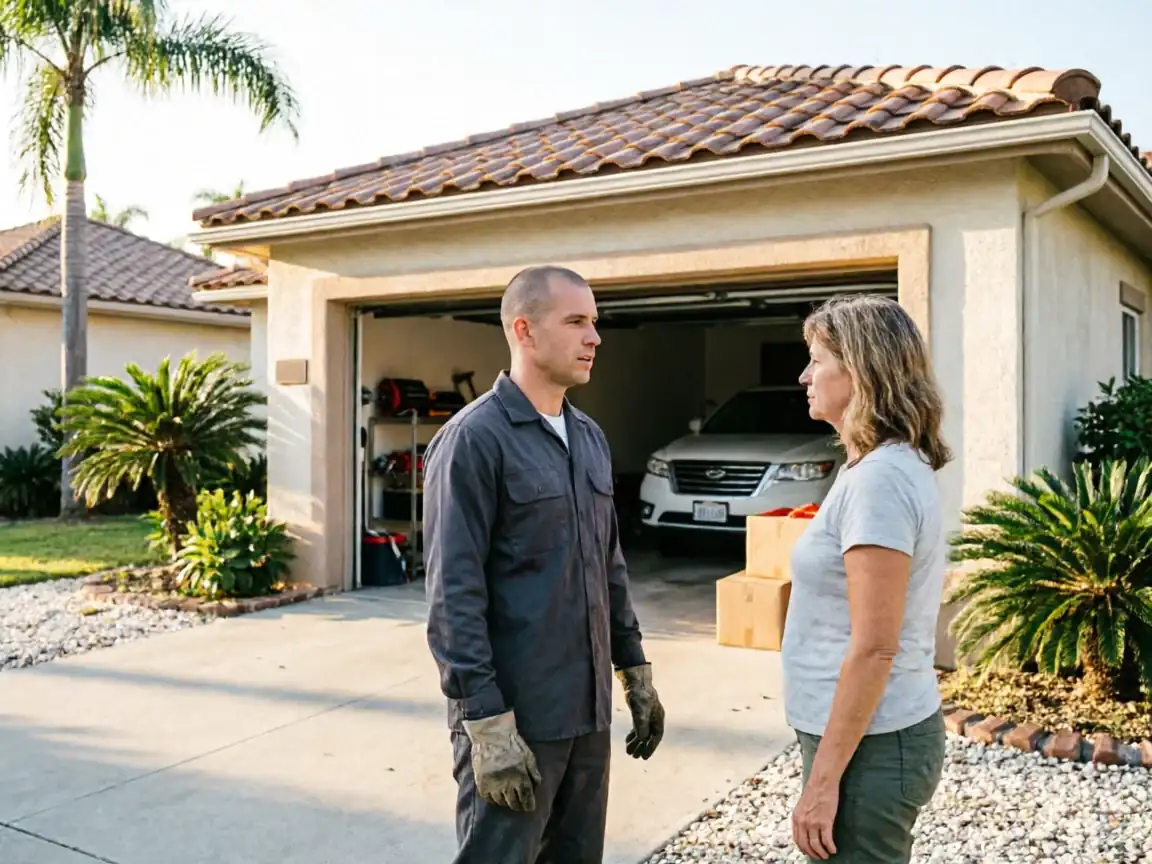
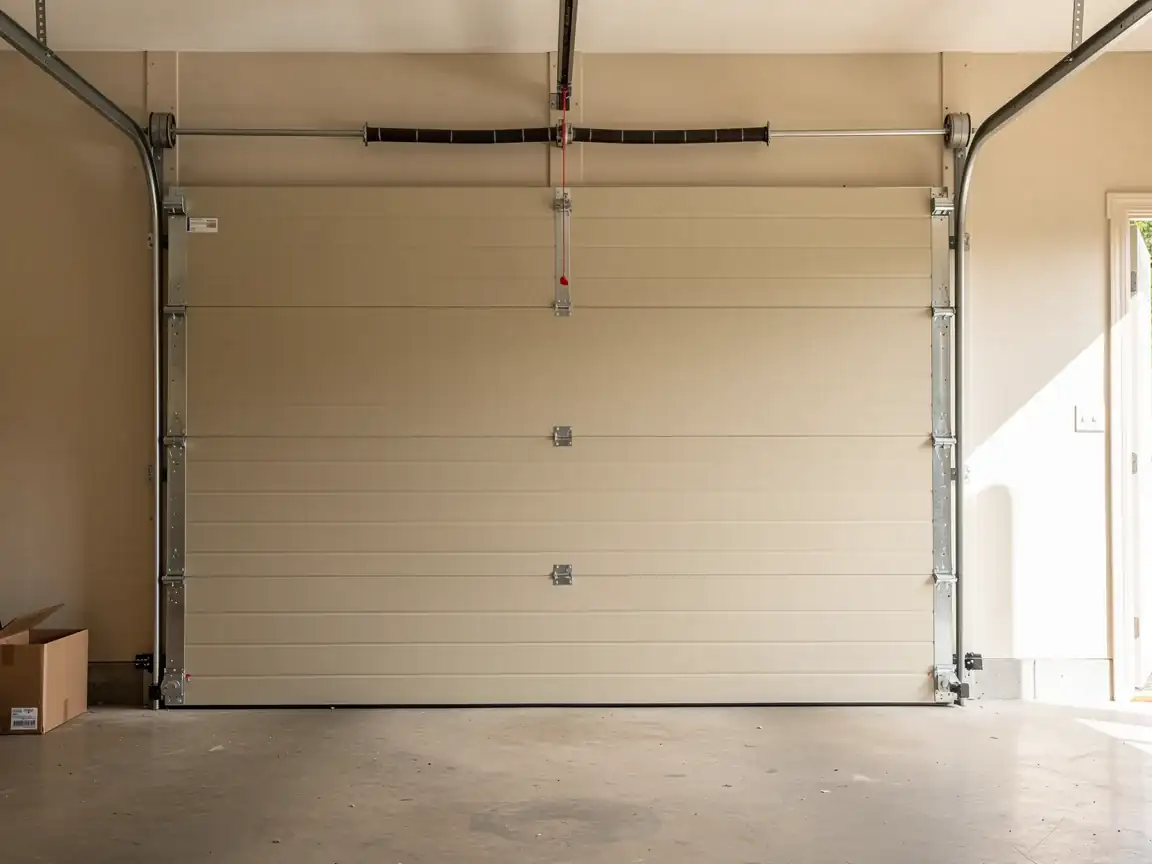
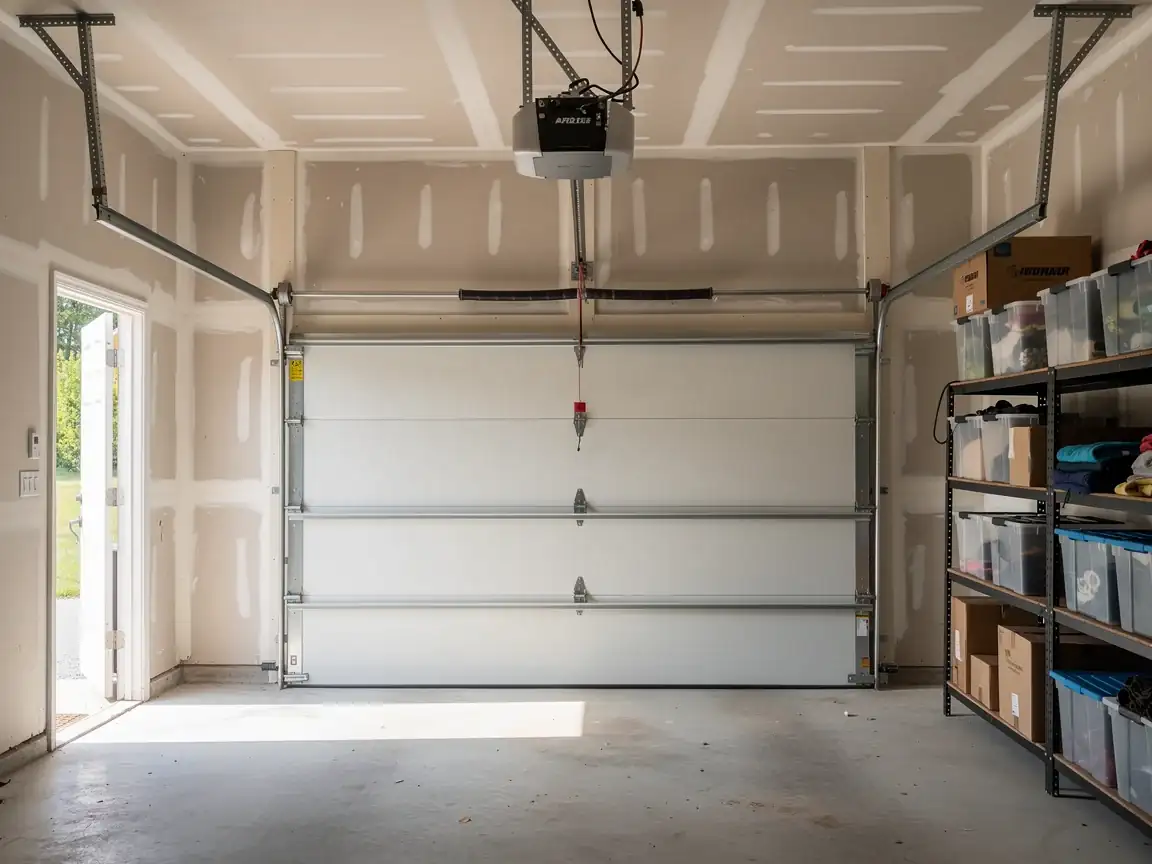
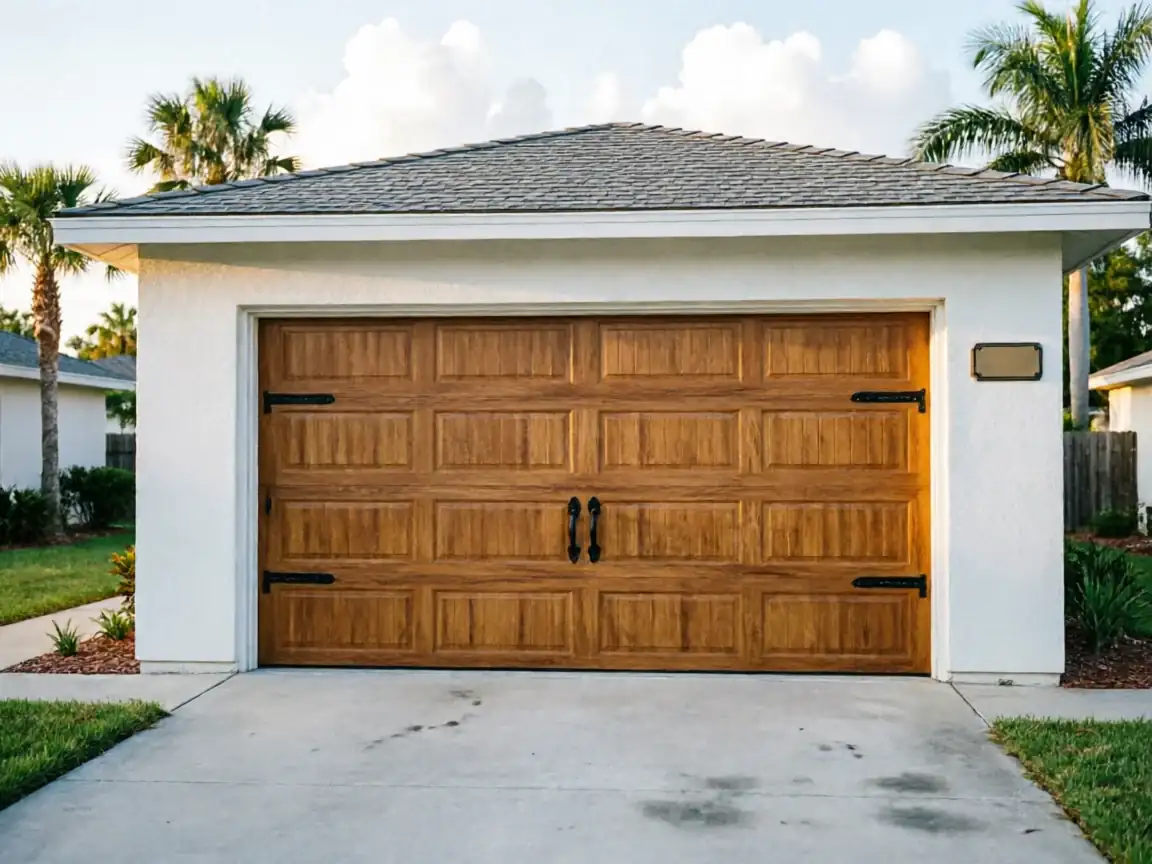
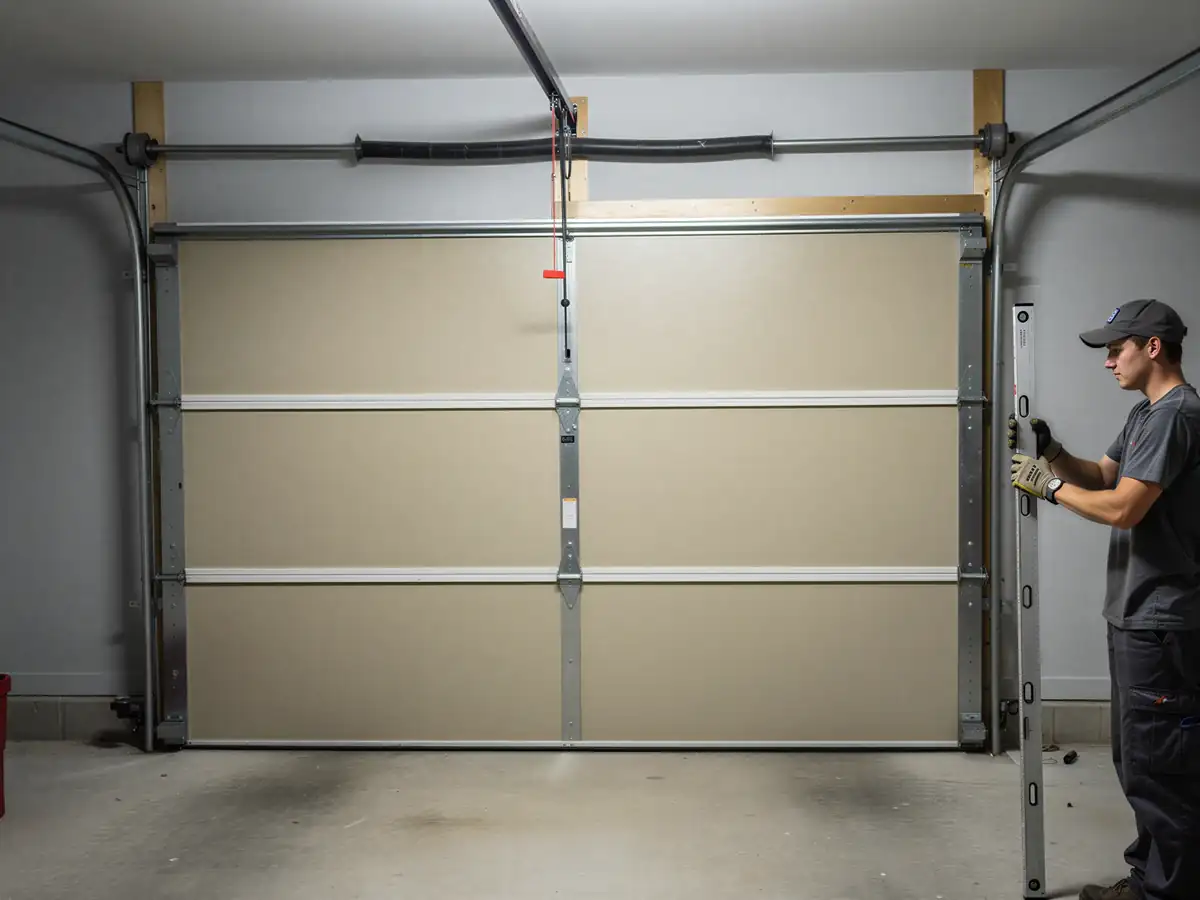
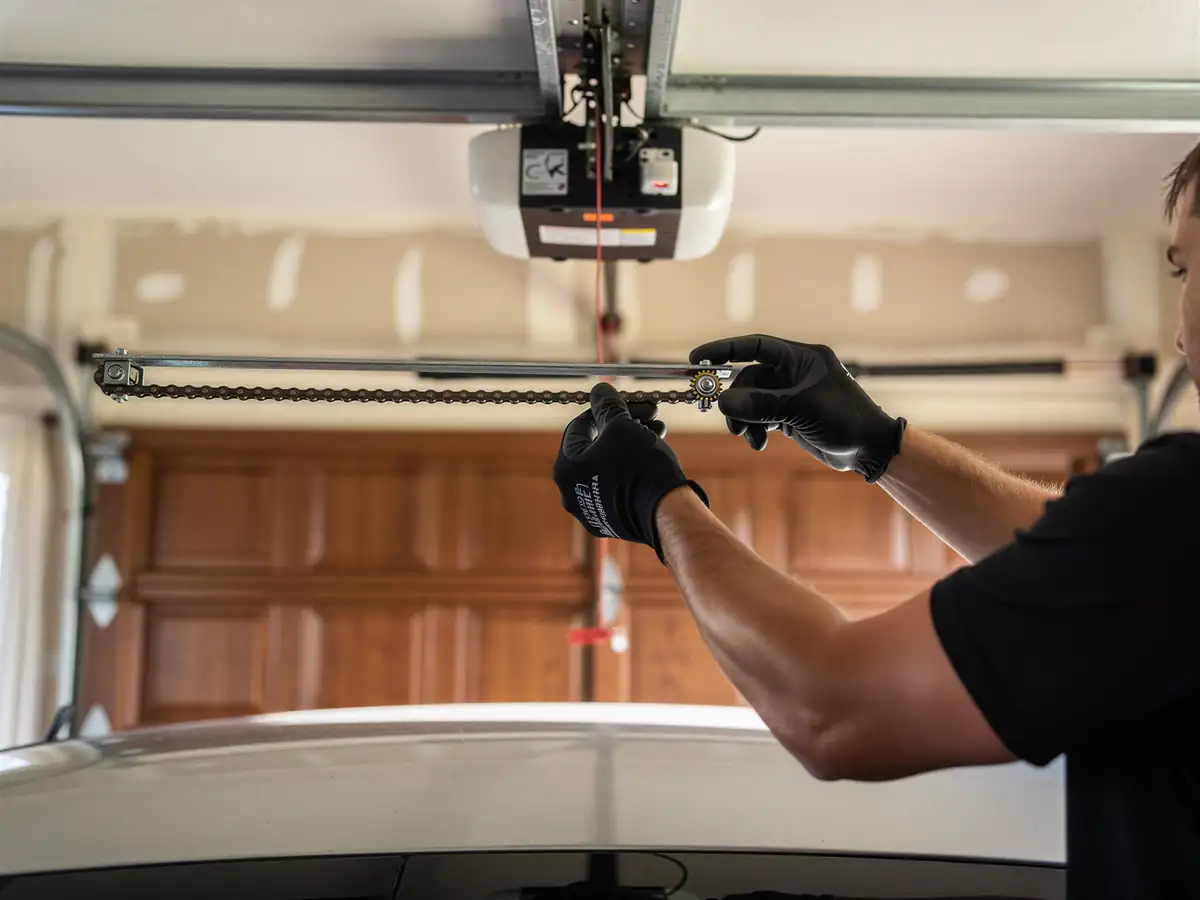
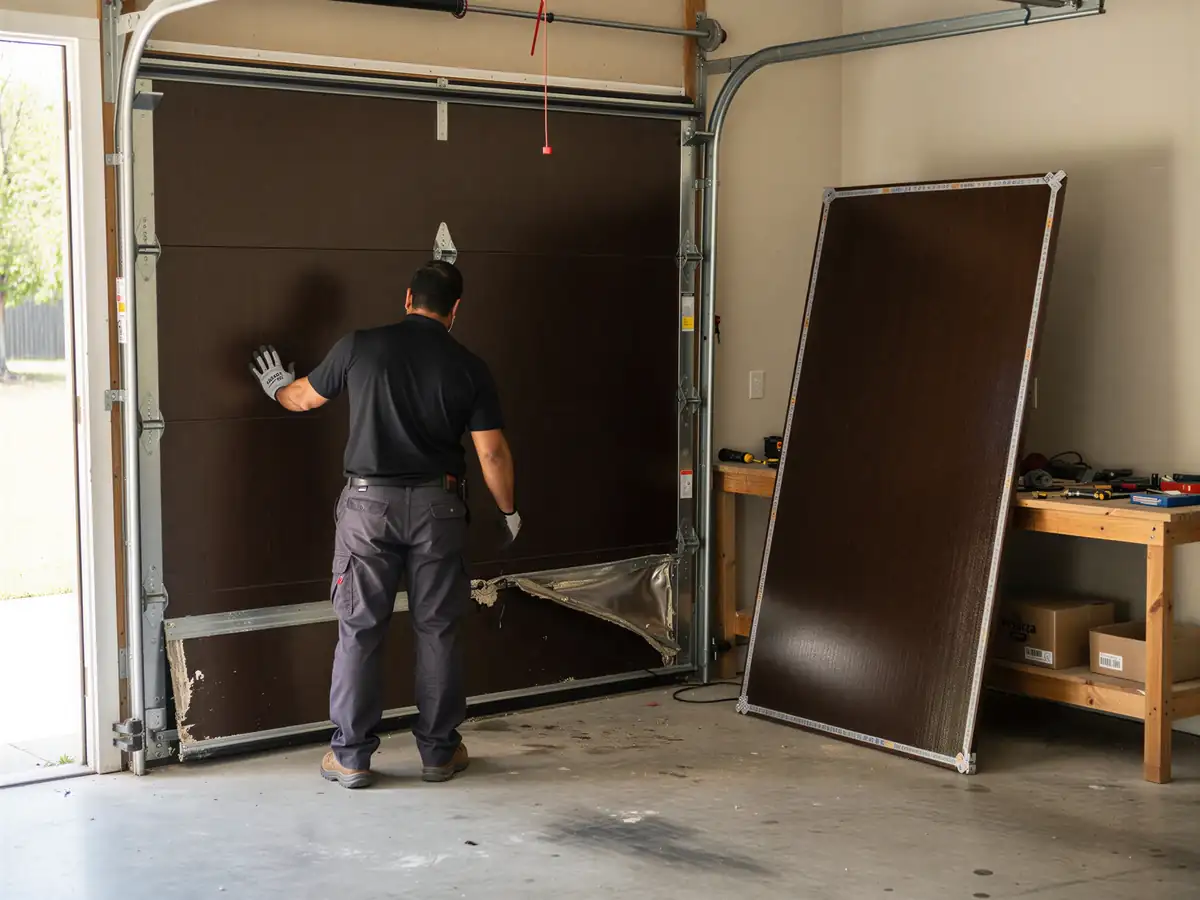
We don't quote a number over the phone before we've seen the door, and we're not going to invent one here. What drives the cost on most Casselberry calls is simple: is this a spring, a roller set, or a full opener swap, and how much of the original 1980s-era hardware is still on the track. A single broken torsion spring replacement is a different job than a double-door conversion where the cable, drum, and bottom bracket are all original to a house built in the early 1980s - which is common, since Casselberry's median home year is 1984. The honest limitation here: if your opener board is dead and the model is more than twenty years old, we may not be able to get a matching part fast. Sometimes the right call is a new opener rather than chasing a board for a unit nobody stocks anymore. Across the area we serve, median household income runs around $82,768, and that number matters less for what we charge than for what decision makes sense - repair a sound door with a failed part, or stop pouring money into one that's at the end of its service life. We'll tell you which one you're looking at before we start.
The Symptom
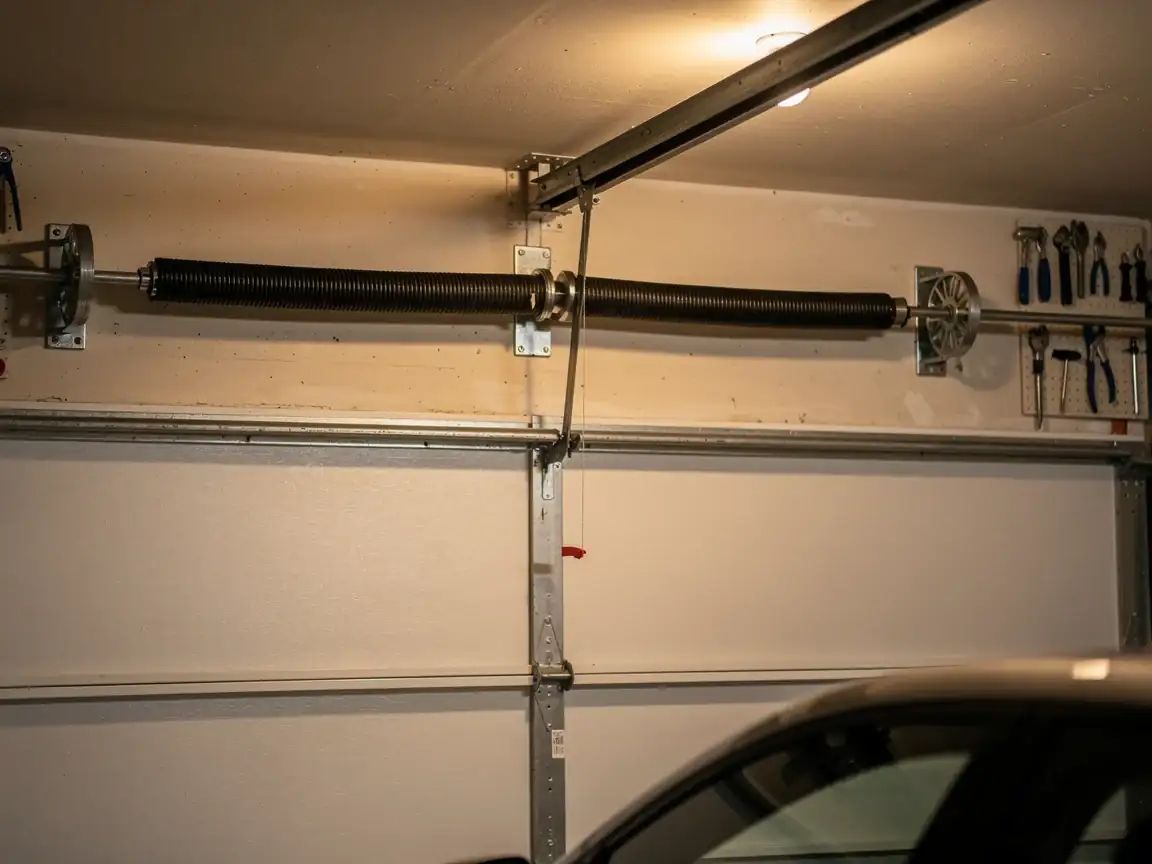
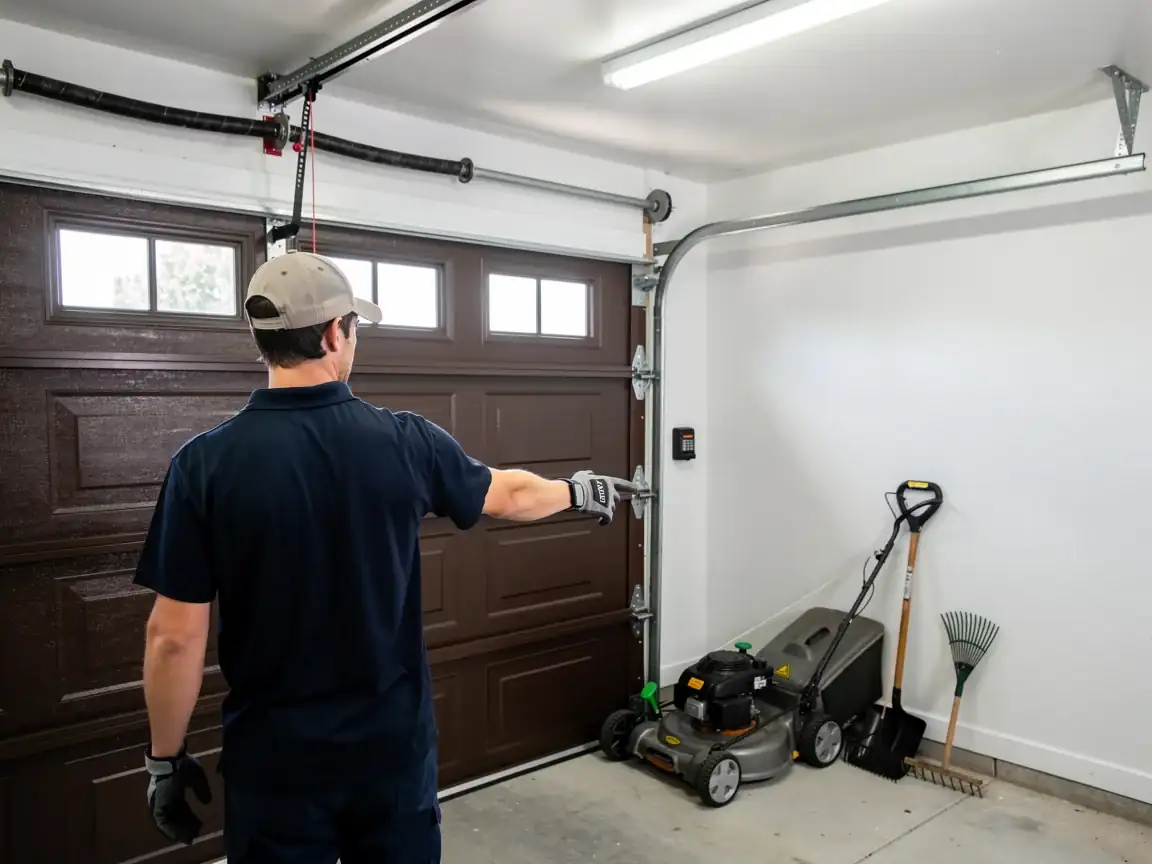
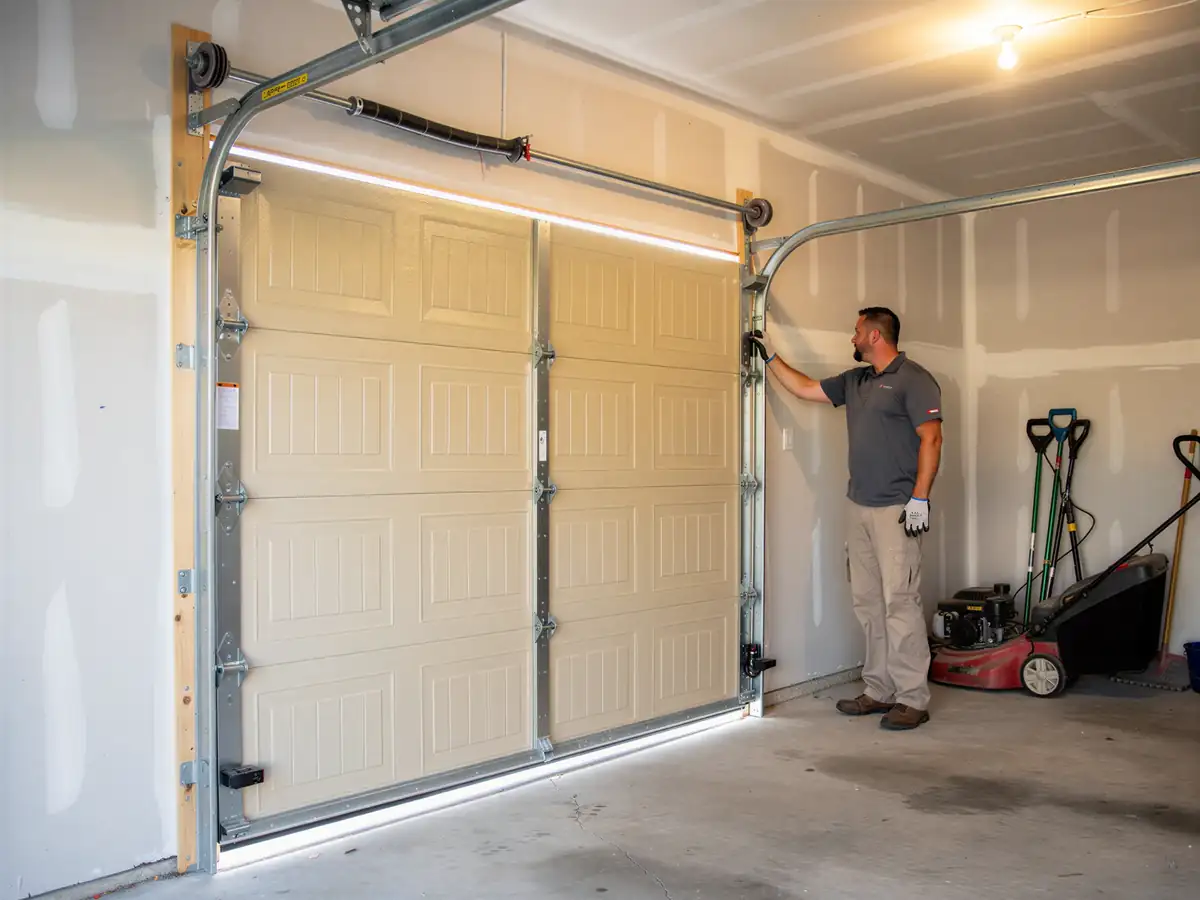
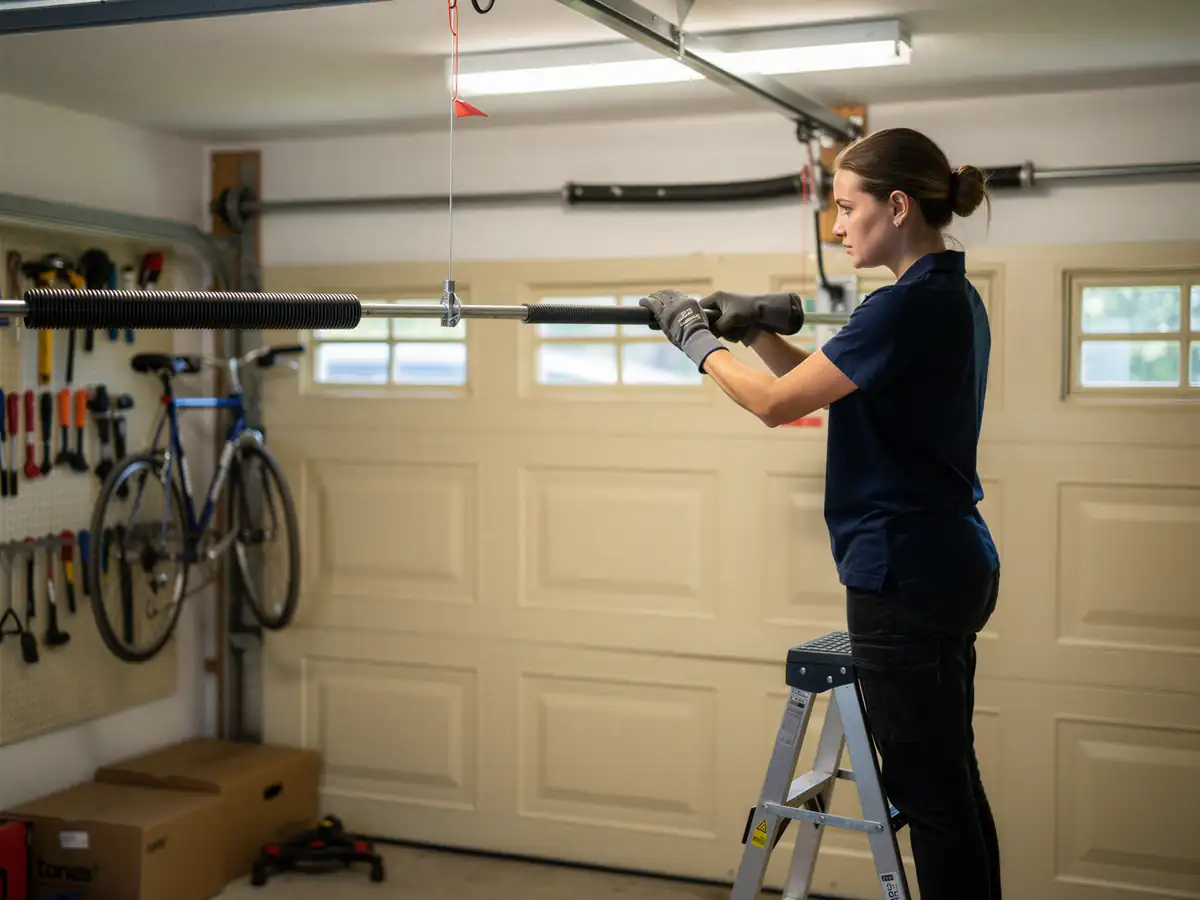
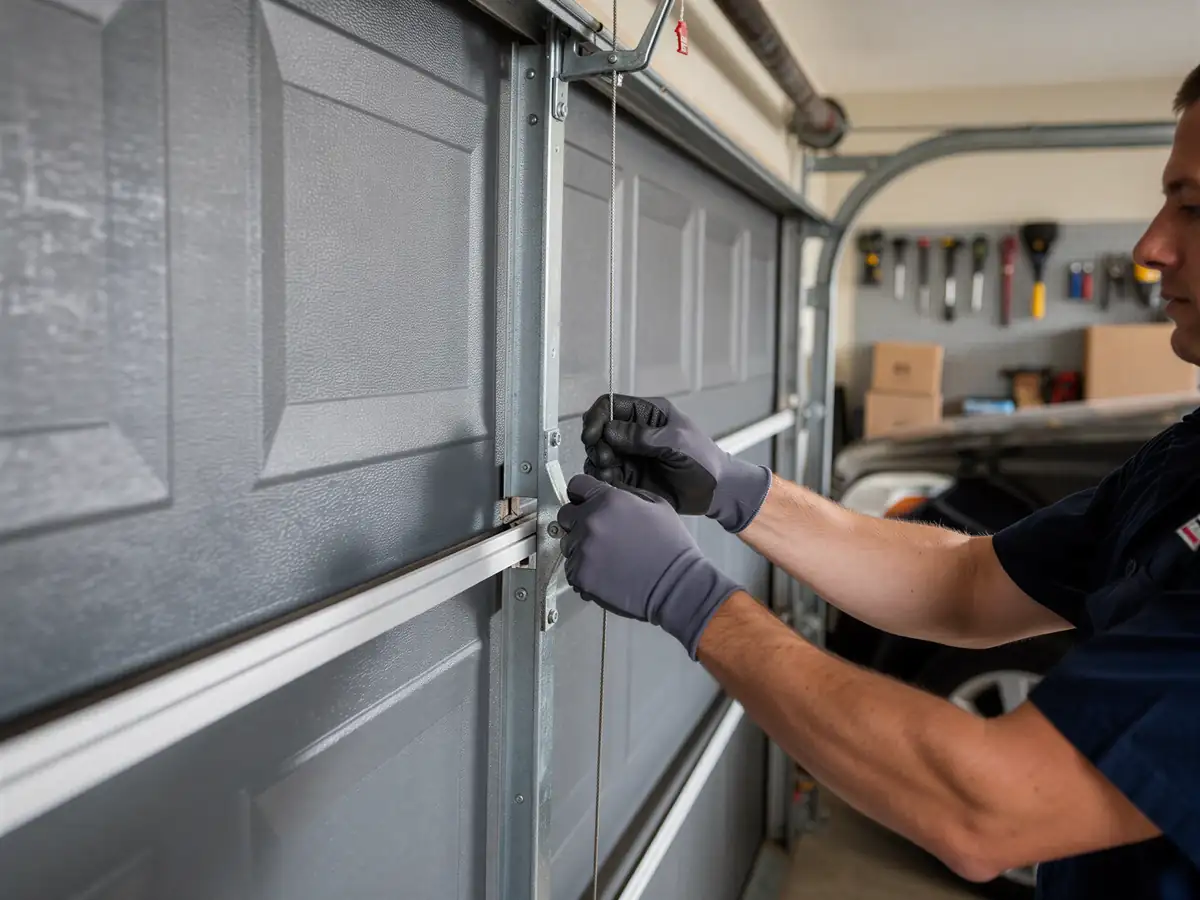
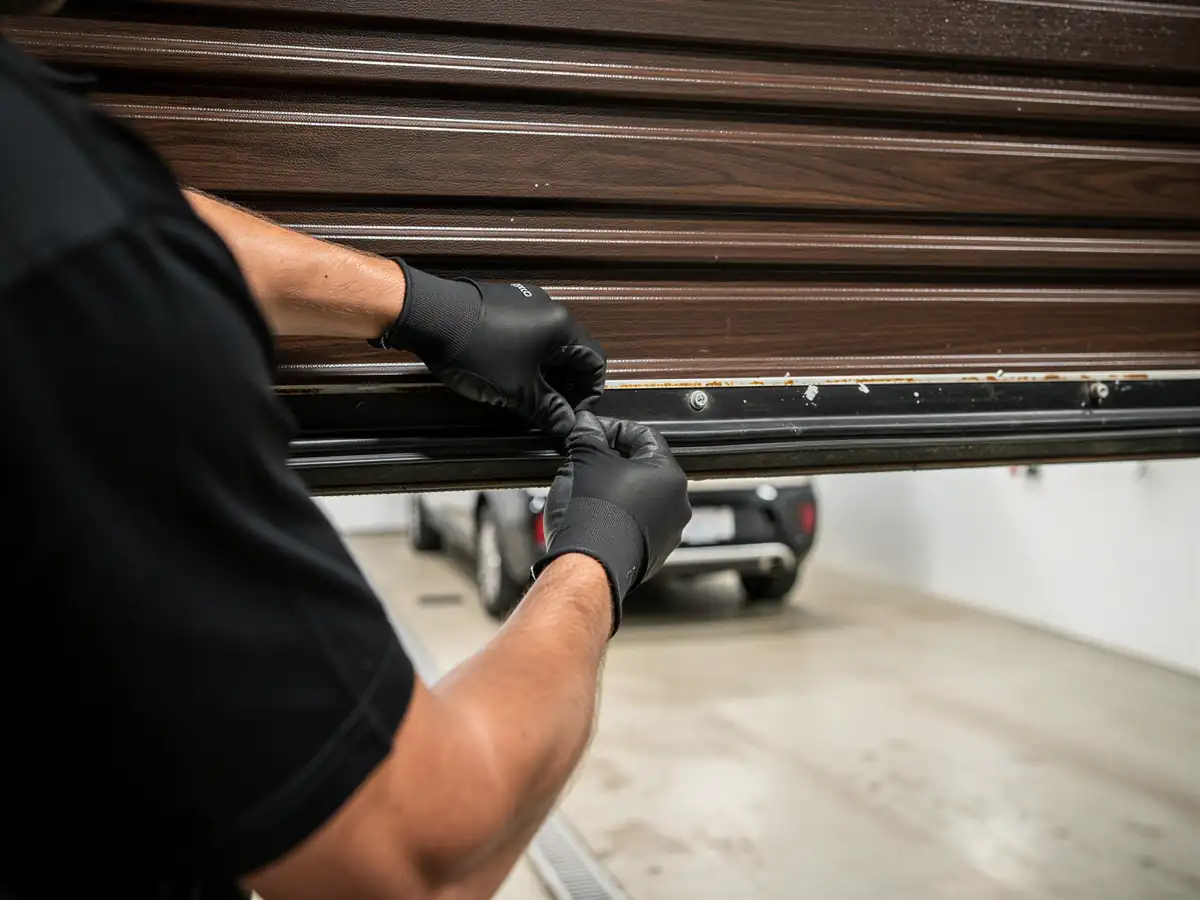
The call usually starts the same way: the door groans, drops a few inches off-level, or the opener strains and reverses before the door fully opens. Sometimes it's a loud bang from the garage - that's a torsion spring letting go, and on a double door it's almost always the spring that's failed, not the opener motor. Other times it's slower: the door's been getting noisier for months, rollers grinding instead of rolling, the track visibly worn where a nylon roller has gone brittle and started chipping. On older setups you'll see rust bleeding from the spring coils themselves, especially on doors that haven't been serviced since they were installed. None of this is dramatic until the day it is - a spring under tension that finally shears can bend a bracket or drop a door hard enough to warp a panel. If your door is sticking halfway, reversing on its own, or making a sound it didn't make last year, that's not a maintenance item to put off. It's a part at the end of its cycle life, and in a house built in the 1980s, that part has likely never been replaced.
Why This Fails Locally
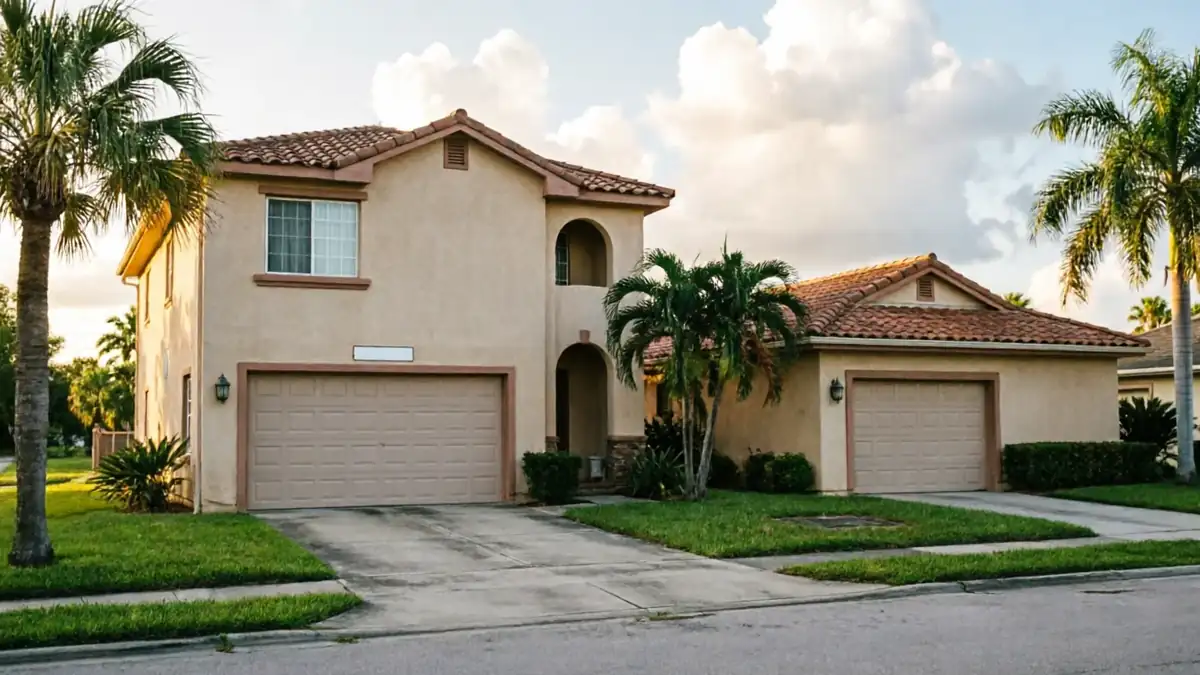
This isn't a cold-climate problem - Casselberry sits in a mild temperate band, so we're not dealing with steel springs that crack from hard freezes the way a northern shop would. What we're dealing with is age. Casselberry's housing was built mostly between 1964 and 2004, with the median year sitting at 1984, and that applies across most of the nearby named areas too - Fern Park two miles south, Longwood three miles north, Maitland four miles west, Goldenrod four miles east. A garage door spring is rated for a cycle count, not a calendar date, but most of these houses have had the same original torsion spring and the same galvanized rollers since the day they were built. Forty years of opening and closing adds up regardless of the weather. The humidity here does its own slow work too - nylon rollers and plastic idler bearings don't like sustained moisture, and they go brittle years before a homeowner notices. So the pattern we see across Casselberry and the surrounding 1980s-vintage subdivisions isn't storm damage or freeze damage. It's original equipment reaching the end of a cycle count nobody was tracking.
How to Book
If your door is making a new noise, hanging unevenly, or the opener is straining, don't keep running it - a spring at the end of its life doesn't usually give much warning before it lets go. Go to the homepage at / and send us what's happening: what the door sounds like, whether it's a single or double, and roughly how old the opener is if you know it. We'll ask a couple more questions and get a time on the books. We work Casselberry and the surrounding area day to day, so we're not routing your call through a dispatch center three counties over. One thing worth knowing up front: if the part you need is an obsolete opener board or a spring size nobody carries locally, we'll say so before we schedule anything, rather than have you wait on a truck that can't fix it that day.
How it works
From “it’s stuck” to “it’s fixed”
01
Tell us what’s wrong
Describe the symptom - won’t open, loud bang, opener runs but the door won’t move.
02
On-site diagnosis
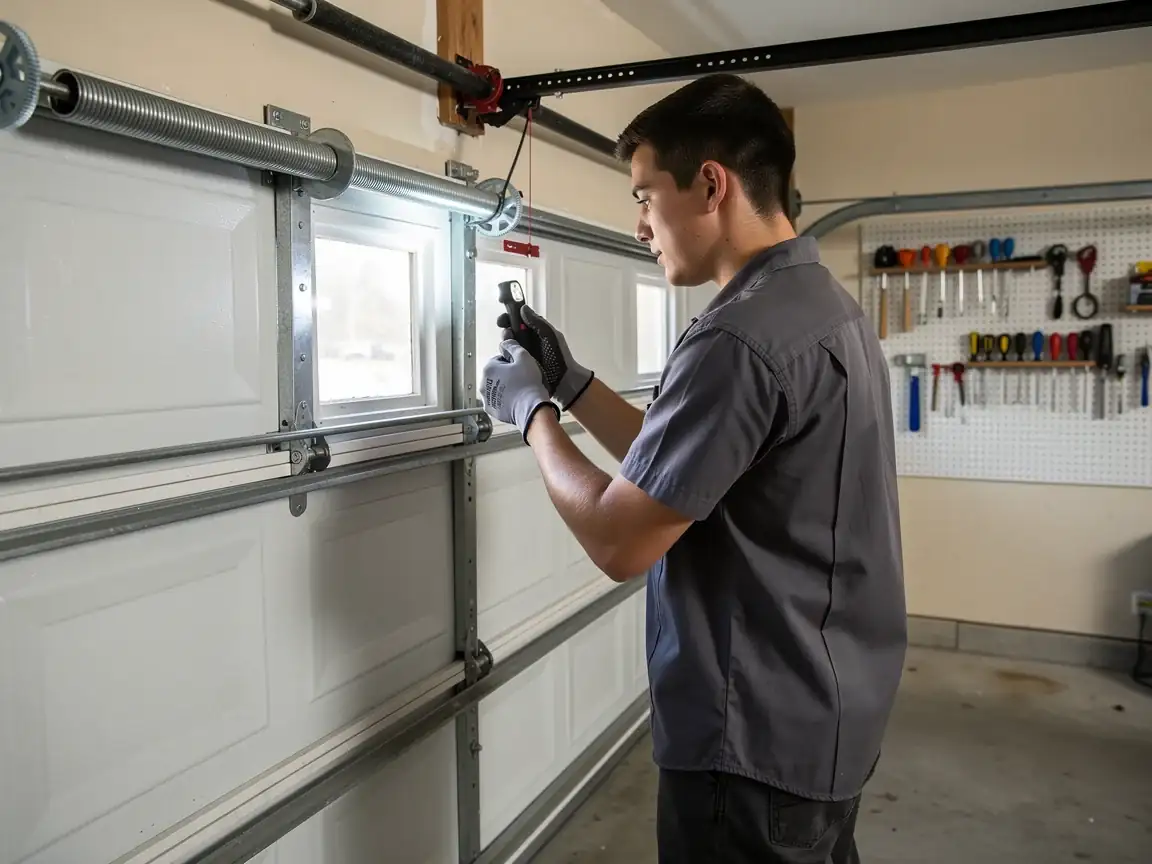
A technician tests the door under power and by hand and finds what actually failed.
03
Clear, up-front plan
You get the fix that’s needed and what drives the cost - before any work starts.
04
Repaired & tested
The repair is done, the door is set true and tested, and the work area left clean.
Not sure which repair your door needs in Casselberry, FL? Describe what it’s doing - every job starts with a diagnosis.
Straight answers about garage door repair in Casselberry. Still unsure? Ask us directly.
Why did my spring break with no warning?
Torsion springs fail by cycle count, not by age on a calendar, and most Casselberry homes still have the original spring from construction - often from the 1980s. Once a spring nears the end of its rated cycles, it can let go on a day with nothing unusual happening. The noise and wear often show up weeks before, but the actual break is sudden.
Is Casselberry's weather part of the problem?
Not the way cold-weather towns deal with it. Casselberry sits in a mild temperate band, so hard freezes aren't cracking steel. The wear we see here is mechanical age plus humidity, which makes nylon rollers and plastic bearings go brittle over years of use rather than from any single weather event.
My opener is from the 1990s - can you still fix it?
Sometimes, and sometimes not. Parts for openers that old can be hard to source, and we'd rather tell you that up front than have you wait on a part that isn't coming. If the board or motor is original to a house from that era, replacement is often the more reliable call than a repair.